


- Home
- Companies & Suppliers
- Downloads
- Vodex BOFA - Model ILF - InLine Filter ...
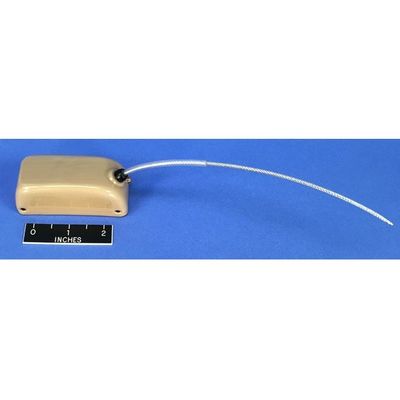
Telonics - Model TGAV-4270-4 and TGAV-4277-4 -GPS/Iridium Avian Systems
Telonics GPS/Iridium units can be used to remotely obtain location and other data from animals anywhere in the world. Telonics Quick Fix Pseudoranging (QFP) can be incorporated into these units. They can include mortality, activity, and temperature sensors; and geofencing technology. Users can define GPS, Iridium, VHF, and sensor schedules to best meet their project requirements. Iridium is a two-way system, which allows confirmation of messages received and remote modification of programmed parameters.
Examples of operational lives listed above are calculated using Telonics Product Programmer (TPP) using the following parameters: average environmental temperature 10°C, average time to GPS fix 75 seconds, average time to QFP 15 seconds, VHF pulse period of 1000 ms, Iridium transmission every other day (except Iridium weekly for examples with one position per day).
* The TGAV-4277-4 has geofencing and auxiliary scheduling capabilities.
- The Iridium satellite network consists of 66 cross-linked satellites in low earth orbit (LEO), and provides continuous (24/7) coverage world-wide.
- Iridium is a two-way system. The Iridium module on the animal checks for an adequate link prior to data transmission, and data acknowledged as successfully received does not need to be repeated. If a link is not achieved or data is not acknowledged, that data can be transmitted later when a link is established.
- The two-way link allows commands to be sent to the Iridium unit while it is deployed. This allows changing between pre-programmed auxiliary schedules and changing other programmed parameters.
- Data is normally retrieved through a third-party, metOcean telematics, which offers the least expensive data retrieval option for users. Data rates depend on the amount of data transferred, but are frequently as low as about ~$7.50/unit/month with an Iridium transmission every other day. There is a one-time activation fee of $30 or $40 per transmitter.
- In addition to the GPS and Iridium portions of these units, they typically include a VHF transmitter. The VHF transmitters can be used to locate or monitor the animals from the ground or aircraft, and aid in recovery of a unit at the end of a study.
- Users can program or reprogram Telonics GPS/Iridium units through use of Telonics Product Programmer (TPP). TPP can be used to obtain estimates of battery life and data acquisition costs through metOcean telematics under various possible programming scenarios prior to deployment. TPP is also used to send commands to the Iridium unit once it is deployed.
- GPS/QFP collection schedules, Iridium transmission schedules, VHF schedules, and sensor options (e.g. mortality, activity, and temperature) can all be user-defined. Scheduling can be programmed to change over time (e.g. seasonal changes where monitoring might be more or less intensive at certain times of the year). Some Iridium units (e.g. the TGAV-4277) allow the primary and up to three auxiliary schedules to be programmed, with easy switching between schedules controllable via TPP. TGW-4X77 models also allow users to reprogram the units remotely through Iridium and use of an authorized copy of TPP-GPS software.
- QFP is Telonics quick fix positioning technology that obtains the data necessary to calculate a GPS position in as little as 3 seconds. This allows positions to be quickly determined with less energy expenditure than a standard GPS position. Telonics Iridium units can be configured to collect only GPS, only QFP, or a mix of the two location types.
- A single Iridium message can contain up to ~70-80 GPS positions, or ~10 QFP positions.
- Data retrieved through the Iridium system, or downloaded from a unit in hand, are processed using Telonics Data Converter (TDC). TDC is used to convert raw data from Telonics transmitters into data reports and to display locations on Google Earth and Google Maps. You can review, save, and edit TDC reports in Microsoft Excel or other spreadsheet programs.
- All positions determined and sensor data collected is stored-on-board the unit, thus if the unit is able to be recovered, stored data can supplement what was transmitted through Iridium.
- A real-time clock and calendar controls all timing functions and is re-synchronized with GPS time to assure high accuracy timing. All timing is programmed using Coordinated Universal Time (UTC).
- When turned off using a magnetic switch, these units consume less than 10 µA; this allows storage for extended periods with minimal impact on operational life.
- Units can be refurbished to their original condition at Telonics.
- Telonics GPS Iridium units are FCC and IC certified and available for use throughout the United States and Canada with no additional licensing required for the data transfer component.
- Optionally delivers data to EarthRanger, allowing you to map historical and real-time locations online and create a unified view of data from Telonics transmitters and other sources.
With Telonics TGW-4*77-4 and TGAV-4*77 series GPS/Iridium systems, up to 3 Auxiliary schedule sets can be defined. Auxiliary schedules are useful for increasing or decreasing the intensity of data collection and/or data transmission. Auxiliary schedules are also useful for adjusting the VHF beacon duty cycle to save energy when there are no plans to be out in the field monitoring units with a VHF receiver. Auxiliary schedules can provide the following options to the primary schedule:
- Alternate schedules for collection of GPS, QFP-GPS, underwater, activity, and/or temperature data
- Alternate VHF Beacon transmission periods
- Alternate Iridium transmission interval, transmission retry delay, and message expiration
GPS/Iridium systems can be directed to execute an Auxiliary schedule (or return to the primary schedule) by sending commands over the Iridium data link.
Commands to GPS/Iridium systems are sent via email using Telonics Product Programmer (TPP). Internet connectivity and an email provider are required.
After receiving a schedule change command, GPS/Iridium systems will switch to the specified schedule immediately and will continue to execute that schedule until otherwise commanded. Sent commands are received by the fielded unit at the time of a scheduled Iridium transmission, or units can be programmed to check for messages more frequently by defining a "command check interval" which is shorter than the Iridium transmission interval.