


- Home
- Companies
- Etansari Grafex Srl
- Products
- Grafex - Model GG - Grooved Gaskets
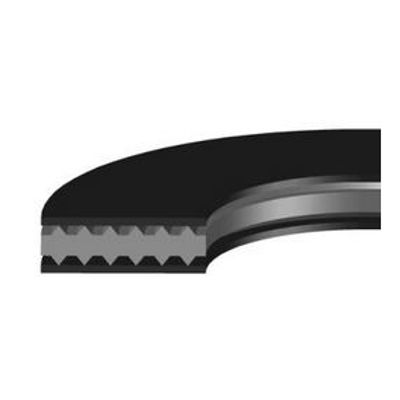
Grafex - Model GG -Grooved Gaskets
Advantages of grooved gaskets:
- Depending on the metal core, the gaskets can be refurbished (the only type of gaskets that can be used again after having been refurbished)
- Very good sealing properties for a wide variety of seating stress levels
- Helps the compensating of high temperatures and pressure fluctuations
- Excellent when used for narrow flanges
- Easy to manoeuver
Main standards for grooved gaskets:
- ASME B16.20
- EN 1514-6
- EN 12560-6
Recommended thickness of the ring: 3 mm or 4 mm.
Recommended thickness of the sealing material: 2 x 0.5 mm or 2 x 1 mm.
Standard materials:
- Metallic ring: SS 304; SS 316L; SS 321; SS 304L; Carbon steel
- Sealing material: flexible graphite; PTFE; Mica; Ceramics
Types of grooved gaskets:
Grooved gaskets are also available in convex profile. The parallel profile core is the standard design.
GG-CR0- is an independent sealing element. Usually used for Tongue and Groove or Male and Female flanges connection. Not recommended for Flat Face or Raised Face flanges types due to misalignment issues.
GG-CR1- Composed of the sealing element and a guide ring machined from one piece of metal. Used for Flat Face and Raised Face flanges, where the outer ring allows the axial alignment with the pipe bore.
GG-CR2- Composed of the profiled core with a loose guide ring that is connected onto the outside diameter of the core. The guide ring is manufactured from a thin 0.5 mm plate sheet and is attached to the sealing element. Used for Flat Face or Raised Face when the material of the metallic core is very expensive or hard to machine. It is used for resistance to radial shear and temperature differences between the flanges.