American Carbon Company
  1. Companies
  2. American Carbon Company
  3. Products
  4. ACC - Graphene Applications in Advanced ...

ACCGraphene Applications in Advanced Materials

SHARE

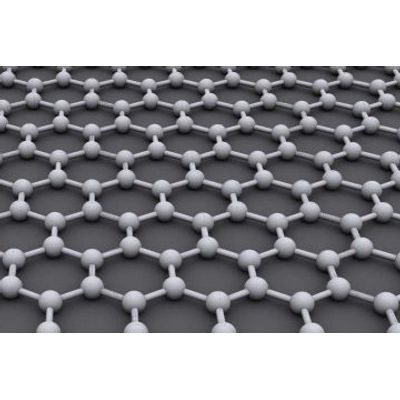
American Carbon is at the forefront of this emerging nano-material.  Our team of researchers and product developers have been working with a number of laboratories, product manufacturers, and end-users to develop products that are economically viable for commercial applications in today’s market. There is no doubt that graphene is on a trajectory to significantly change the world as we know it today.  By strict definition graphene is a one atom thick nano particle connected in a honeycomb lattice structure.  When compared to steel, it is over 100 times stronger by size (and a University of Massachusetts study found it may be able to absorb as much as 10 time more energy before failing)  When compared to copper, graphene is much more electronically conductive (although much more brittle). And finally, graphene is rewriting Fournier’s law of thermal conduction which defines how a solid absorbs heat.  While these three amazing discoveries are impressive by themselves, the nearly invisible nature of the structure leads to nearly unlimited applications to better everyday products from electronics to lubricants to coatings and even water treatment.


Most popular related searches

American Carbon, while always looking at the material as a whole, is currently focusing on a number of specific markets.  Follow the links below to learn more about graphene and how American Carbon can make your product better.


As with any product defining the specification of different grades is paramount to a successful material application. There are many different types of steel, and each one has a different function and application – from the basic 4 of carbon, alloy, tool and stainless, the list is split into even smaller subcategories. The same is true in practice for graphene – but not in technical terms. As of June 2016 there is no universally standard for graphene material definition [although the National Physical Laboratory (NPL) is currently working to correct this]. This lack of scientific clarity can make for a precarious situation for a buyer. And since graphene is measured on the nano scale, confirming sales literature can be difficult with a quick review. Therefore with all of the graphene producers globally it is critical to find one that you trust to provide graphene or graphene enhanced products as described. In order to set a baseline, American Carbon utilizes definitions set out by the Carbon Journal (full journal article here) which is outlined below.

In its purest, most precise form, graphene is defined as a single atom thick sheet of sp2-bonded carbon atoms arranged in a hexagonal pattern.  This is monolayer graphene and as American Carbon views it the only true “graphene”.  That being said, there are many related orientations that are shown in the table below that are neither as difficult or as costly to produce but still exhibit some very advantageous attributes.

Just as you wouldn’t use stainless steel in structural applications (carbon steel would be the steel of choice), you wouldn’t use Graphene Oxide or Multi-layer Graphene as a anode in a battery cell – the results would be disastrous. And why pay the premium of Monolayer Graphene when Multi-layer Graphene will provide nearly the same advantages as a fraction of the cost. Choosing the correct Graphene grade (and ensuring it is as advertised) is the most critical step to a successful Graphene application.  Let American Carbon help you determine how to best utilize graphene in your specific application, or follow the links on the left to a number of different projects we are working on independently.




One of the most promising ways to add graphene to commercially viable products is through dispersions in fluids. And more specifically, adding graphene to industrial protective coatings and lubricants. Due to the nano sized particles and the advantageous conductive and friction qualities of graphene, it is an ideal additive to enhance the capabilities of fluids.  Additionally, relatively small fractional additions by weight can have a significant impact on the properties of the base fluid.

American Carbon has made dispersion technology one of our prime focuses in graphene development. Creating a colloidal solution with a solid that stays dispersed in the fluid without quickly precipitating is always a challenge – no matter how small the solid particles are. Over time, solid precipitate out of the liquid and settle on the bottom of the storage container. Creating a product with an exceptional shelf life and easily redispersed is paramount to successful graphene applications in fluids.

American Carbon already markets a 2-part heavy duty epoxy for pipeline and other steel infrastructure applications that is a suitable and highly beneficial alternative to current standard coatings.  Please contact us for more information on this coating which is made to order to each specific project’s specifications.

We expect our marine coating to be market ready in mid 2017.  Most marine coatings are typically a multi-part process with a number of different coating types, including epoxy and urethane.  Marine coatings need to function in a wide range of environments from hull bottoms on moving vessels to above waterline on vessels to stationary objects such as piers, docks and seawalls.  We see the benefits of graphene as an additive to most existing coating – or a replacement to the primary solid including cuprous oxide.  Graphene has the potential to reduce friction, reduce effective coating thickness, increase product life and decrease biofouling effects,

As we discussed in a recent blog post (here), a special concern to American Carbon is biofouling or living creatures attaching to a structure.  In the Great Lakes region invasive mussels are wreaking havoc on our water supplies,  native species and swimming beaches.  A coating that these mussels prevents them from attaching will greatly benefit our local waterways and economy.  All piers and structures that accumulate barnacles in fact will benefit from a graphene infused coating as well.