


- Home
- Companies
- McLanahan Corporation
- Products
- McLanahan - Hammermill Crushers
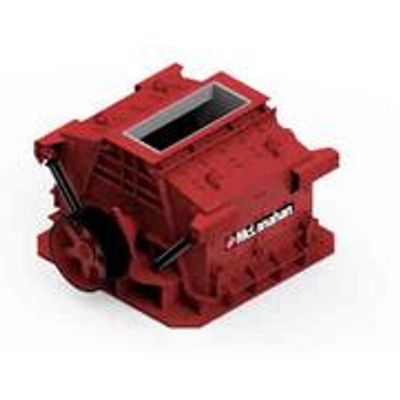
McLanahan - Hammermill Crushers
Hammermill Crushers are known for providing greater reduction ratios in a variety of materials for the aggregate and industrial markets. The Universal HammerMaster and LimeMaster are available in several model sizes and focused on the aggregate industry. Universal Industrial Hammermills are available in three different styles of mills and numerous model sizes in each style. The heavy-duty, rugged construction of all Universal Hammermills allow for greater applied forces to achieve higher production rates with controlled product top size and gradation.
Through years of experience and refinement, McLanahan engineers have designed two distinct families of Hammermill Crushers. These crushers are capable of processing a wide range of materials. If you are looking for reliable performance and a solid return on your investment, McLanahan’s Universal lines of Hammermill Crushers are the perfect answer for you. With numerous models to choose from, and a wide selection of hammers and grate combinations, McLanahan can provide a specially formulated mill to fit your specifications, along with customer support to ensure it runs efficiently for the life of the machine.
Models of McLanahan Hammermill Crushers Universal HammerMasterThe Universal HammerMaster has been refined over many years, beginning with the Universal Pulverizer nearly a century ago. The HammerMaster is a high-speed mill noted for its ability to generate high-quality aggregates, cubical in shape, with superior soundness. Available in three sizes, the HammerMaster is known for making excellent asphalt chip material, concrete stone, and general base material and road rock. This mill is also capable of making agricultural lime for pH control in farm fields.
Universal LimeMasterThe Universal LimeMaster was developed over the same time period as the HammerMaster and incorporates many of the same components. However, the LimeMaster is solely focused on generating pulverized lime. Most limestone quarries and mines produce an abundance of fines. In some cases, with careful screening they can create a marketable aglime or chemical lime without further investment. As these markets expand, the LimeMaster can be added to the operation and greatly increase the production of this valuable product, also known as calcium carbonate.
Industrial HammermillsUniversal Industrial Hammermills are available in three distinct styles designed around specific types of operations. We offer the Standard Hammermill, the Non-Clog Hammermill and the Centerfeed Hammermill. All the Industrial Hammermills share a common emphasis on severe-duty construction and the ability to conform to a broad range of application issues. The Standard and Non-Clog Hammermills are considered primary crushers, with some models capable of accepting a maximum feed size of 72" (1,830mm). The Centerfeed Hammermill is a secondary crusher designed to accept feed from a primary with controlled top size ranging from 3" to 5" (75mm to 125mm). Industrial Hammermills are not limited to limestone or gypsum — they are known worldwide for processing bauxite, nickel ore, phosphate ore, coal, pet coke, clay, shale, and of course, limestone.
How Hammermill Crushers WorkAll Universal Hammermills work on three principal reduction methods: impact, shear and attrition. As material enters the mill from a vertical chute, it comes in contact with the leading edge of the hammers, each of which is firmly secured to the spinning rotor. The hammer is pinned to the rotor body and allowed to swing, and lay back to some degree. The centrifugal force keeps the hammers extended, and the inertia force unleashed on the material shatters the rock on impact. The particles rebound off the impact plates or breaker blocks back into the hammer circle. In an instant, the material is carried into the grate or cage assembly, where shear forces reduce the larger particles and carry them across the grate surface, grinding the particles into a controlled gradation. Openings in the grates and cage assemblies allow particles to escape the mill once they are reduced to the appropriate size.
Hammermills can be used to achieve a number of goals beyond simple material reduction. In many limestone formations, seams or stratus contains soft deleterious material like chert, shale or mudstone. This material can adversely affect the value of the finished product. A hammermill can be set to pulverize the soft stone and shear the edges of the harder stone in a single pass through the mill. Screening after the mill allows for separation of the pulverized deleterious material, while the more cubical stone continues through the system.
The Standard and Non-Clog Industrial Hammermills are designed to reduce the material to a nominal 3" to 5" (75mm to 25mm) output. These are primary stage crushers, commonly followed with Centerfeed Mills or other types of secondary stage crushers. The HammerMaster is also a secondary stage crusher in that the maximum feed size is 6" (150mm). The hammers used in the HammerMaster line of mills all weigh 60 lbs (27kgs), which creates a sufficient force to fracture a 6” stone and remain extended from the rotor. The Centerfeed Industrial Hammermills incorporate various hammers of size and weight. Larger models of Centerfeed Hammermills may allow up to 8” (200mm) maximum feed size.
Hammermill Crushers are known to generate material finer than 3/16" (4mm), which in some applications may be undesirable. However, if there is a market for finer material, or if it is acceptable within the desired product size, Hammermills can achieve reduction ratios that may otherwise require multiple crushers.
These crushers can be used in mining and aggregate material reduction, beneficiation of finished products, primary reduction of bauxite and similar ores, and fine grinding of lime (calcium carbonate).
- Welded steel base
- Abrasion-resistant steel liners
- Cast manganese breaker plates
- Rotor assembly with step-out holes
- Robust construction of housing and rotor
- Double row, self-aligning spherical roller bearings
- Tapered shafts drilled to permit hydraulic bearing removal
- Numerous types and model sizes
- Pre-engineered models for aggregate
- Custom configured mills for industrial use
- Selection of hammers for all models
- Grates and cage assemblies to fit application