


- Home
- Companies
- NUTEC Incorporated
- Products
- NUTEC MaxWool - Model 2300 - ...
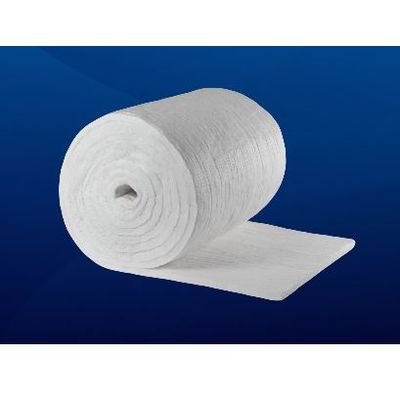
NUTEC MaxWool - Model 2300 -High-Temperature Insulating Blankets
MaxWool 2300 high-temperature insulating blankets are designed using high purity, long strand spun ceramic fibers to provide superior thermal insulation. These blankets are highly effective for high-temperature applications up to 2300°F (1260°C). One of the significant technical benefits of MaxWool 2300 is its production method, which involves a strong needling process, resulting in a completely inorganic product devoid of any binders. Such characteristics ensure no emission of smoke or flame during usage. Its physical properties include low thermal conductivity, excellent thermal shock resistance, high tensile strength, and the ability to absorb sound. Additionally, these blankets facilitate ease of installation and require no dry-out time or curing, crucial for minimizing downtime in industrial processes. They find diverse applications, ranging from furnaces to high-temperature piping, effectively serving industries such as oil and gas, steel, ceramics, and power generation.
MaxWool 2300 high-temperature insulating blankets are made from long strand spun, high purity ceramic fibers forming a strong, flexible needled product which provides superior insulation properties for usage at higher temperatures.
The strong needling of MaxWool ceramic blankets derive in a completely inorganic product with no binder resulting in smoke or flame.
MaxWool 2300 is rated to 2300°F (1260°C) and is available in a range of thicknesses and densities.
- Low Thermal Conductivity
- Low Heat Storage
- High Tensile Strength
- Thermal Shock Resistance
- Sound Absorption
- Easy to Install
- Contains no Binder
- Contains no Asbestos
- No Curing on Dry Out Time Required
- Maximum Use Temperature : 2300⁰F (1260⁰C)
- Continuous Use Temperature : 2150°F (1177°C)
- Chemistry : Alumina, Silica
- Composition : RCF (Refractory Ceramic Fiber)
- Shrinkage @ 2400°F / 24 hrs : 0-3%
- Average Fiber Diameter : 3-4 Microns