


AirProtekt Limited
- Home
- Companies
- AirProtekt Limited
- Products
- Honeycat - Catalytic Oxidation System
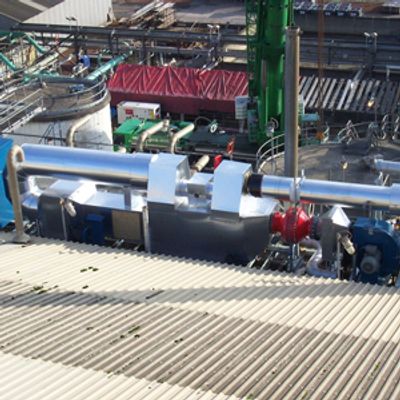
Honeycat - Catalytic Oxidation System
The industrial air pollution control catalysts favoured by Air Protekt comprise thin-walled honeycomb supports coated with a fine dispersion of Platinum Group Metals, impregnated into a high surface area washcoat. The Platinum Group Metal catalysts, which form the heart of a Honeycat catalytic oxidation system, are derived from well-proven autocatalyst technology and offer numerous benefits compared with rival catalytic systems.
Most popular related searches
catalytic oxidizer system
catalytic oxidizer
catalytic oxidation
industrial air pollution control
air pollution control catalyst
catalytic system
industrial air pollution
air pollution control
CVOC
VOC catalyst
These include
- Very high surface to volume ratio using metal and ceramic monoliths
- Low resistance to gas flow with more than 90 percent open area
- Very high intrinsic activity from the use of Platinum Group Metals
- The ability to withstand high temperatures and temperature cycling
- maximum 650°C continuous
- peaks to 725°C
- High poison resistance and the ability to chemically wash the catalysts
- Long effective life
- Typically five to seven years
- Up to 10 years for many applications
- Range of catalyst types
- Economic recovery of the catalyst due to the PGM value
- Standard VOC oxidation catalyst
- Chlorinated VOC catalyst
- LHC catalyst for methane, ethane, propane
- Sulphur-resistant catalyst.
The benefits of Air Protekt’s Honeycat catalytic oxidation system design solutions include:
- Flowrates that can be treated in a single catalytic oxidiser range from 10m3/hr to 60,000m3/hr
- Catalyst modules for installation into existing process exhausts, utilising only the process temperature and pressure (eg ovens, kilns and out-of-compliance thermal oxidisers)
- Concentrator plus catalytic oxidiser
- VOC concentrations between 600 and 2,000mg/m3
- flowrates up to 300,000m3/hr
- Secondary heat recovery for space heating:
- steam
- hot oil
- hot water
- hot air
- Abatement of a wide range of chemicals:
- light hydrocarbons
- carbon monoxide
- chlorinated and non-chlorinated VOCs
- sulphated organics
- Low fuel costs – often no fuel is required during continuous operation
- A range of fuels can be used:
- electricity
- natural gas
- or propane to light fuel oil
- Flexibility of operation (continuous to intermittent)
- warm-up times of 30 minutes or less