


- Home
- Companies
- ADS Pipe Canada
- Products
- Ideal - Model N-12 - WT IB - Pipe (Per ...
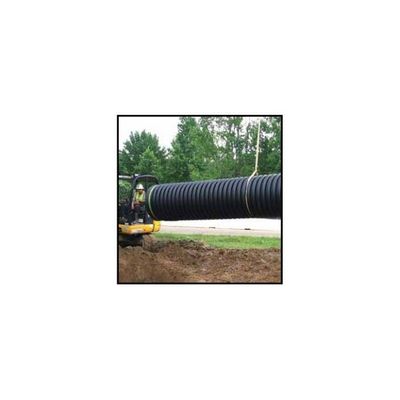
Ideal - Model N-12 - WT IB -Pipe (Per CSA B182.8)
N-12 WT IB (per CSA B182.8) pipe has set the standard in watertight performance for corrugated polyethylene pipe. N-12 WT IB pipe is a gravity flow, watertight pipe, which is available in a complete range of sizes from 100 - 1500 mm (4”-60”) diameters. The pipe is third party verified to meet 74 kPa (10.8 psi) laboratory pressure and vacuum testing requirements. N-12 WT IB pipe (per CSA B182.8) incorporates patented technology to provide a superior watertight joint. An exterior bell wrap provides a quick visual indicator to customers and inspectors that a watertight product is being used. A patented gasket increases its sealing forces as intermittent internal or external hydrostatic pressure occurs. The flared bell and spigot significantaly improves ease of installation. These advanced joint design features reduce infiltration and exfiltration, resulting in outstanding long-term performance.
- Storm Sewers
- Ditch Enclosures
- Retention/Detention
- Slope/Edge Drains
- Culverts/Cross Drains
- Mining/Forestry/Industrial
- Available in 100 mm - 1500 mm (4”-60”) diameters
- Certified to meet the 74 kPa (10.8 psi) watertight joint performance requirements in accordance with the Canadian Standards Association (CSA) B182.8 standard
- Pipe manufactured in 6 m (20’) standard lay lengths, resulting in fewer joints. Custom 4 m (13’) lay lengths are available upon request
- Structurally designed to withstand HS-25, HL-93 and CL-625 highway traffic loads with a minimum cover as follows: 100 - 1200 mm (4”-48”) diameters minimum cover is 0.3 m (1’), 1500 mm (60”) diameter minimum cover is 0.6 m (2’)
- Fast bell-spigot joint assembly with unsurpassed structural integrity
- Superior hydraulics - smooth interior wall will ensure no debris or sediment build-up
- Prevents contamination of soil and local waters from construction runoff sediment, lawn care products, or automobile emissions
- Avoids possible infiltration of sands and fines resulting in sinkholes and differential settlement to adjacent structures