


- Home
- Companies
- Inox Pty. Ltd
- Products
- Inox - Closed Vessel
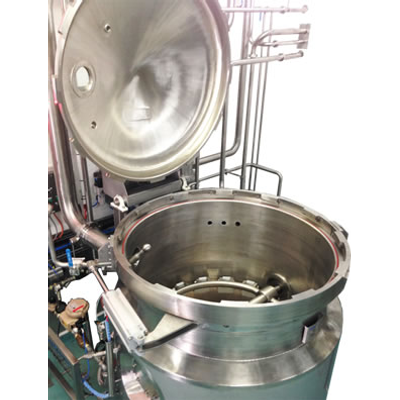
Inox - Closed Vessel
A feature of INOX pressure and vacuum cooking systems is versatility and flexibility. The gentle mixing of the horizontal axis scraped surface agitator keeps product well mixed and consistent as well as providing a shorter process time which in turn then helps to maintain the natural product colours.
The design of the closed vessel with hinged top lid makes available the entire top of the vessel allowing effective filling, manual or by bin tipper.
INOX Process cooking vessels provide the ability to process under vacuum for deaeration, reduction, homogenisation and cooking of different types of food products.
Accurate process temperature control is achieved by a finely tuned P&ID loop complete with steam control valving.
Hygienically designed scraped surface agitator systems are available to avoid product `burn on` with carefully selected engineered scraper materials.
A load cell weighing systems are available to ensure accurate and consistent product manufacture.
Control systems are designed in accordance with relevant Australian standards together with software systems that ensure reliable processing feedback data and high quality hardware that can endure food industry environments.
INOX provide complete system design, including process evaluation, mechanical equipment design, electrical design, installation and commissioning.
- Pressure cooking helps retain the quality of the foods, by reducing the cooking time, by increased temperature (higher boiling point) inside the vessel and pressure which retains the particles within the product.
- Cooking by pressure results in healthier and better tasting food, prepared in less time and with less energy.
- Food quality and flavour retention is achieved as the vessel is sealed and pressurised during cooking. The vessel does not permit air or liquids to escape below a pre-set pressure.
- Makes excellent sauces after sautéing by dissolving products of caramelisation and mallaird reaction. Works well with foods that require water infusion/braising methods
- Higher temperatures are more effective at killing bacteria.
- Short, low-temperature boil preserves colour, flavour and wholeness of fruit/vegetable pieces.
- Less inversion of sugar than when jam is boiled at atmospheric pressure and temperature.
- Overheating is avoided, since size of batch is not influenced by temperature and time it takes for steam bubbles to pass through the batch.
- Larger batches can be processed than with the open-kettle method.