

- Home
- Companies
- IPEX - an Aliaxis Company
- Products
- IPEX Bionax - Model CIOD - PVCO Pipe
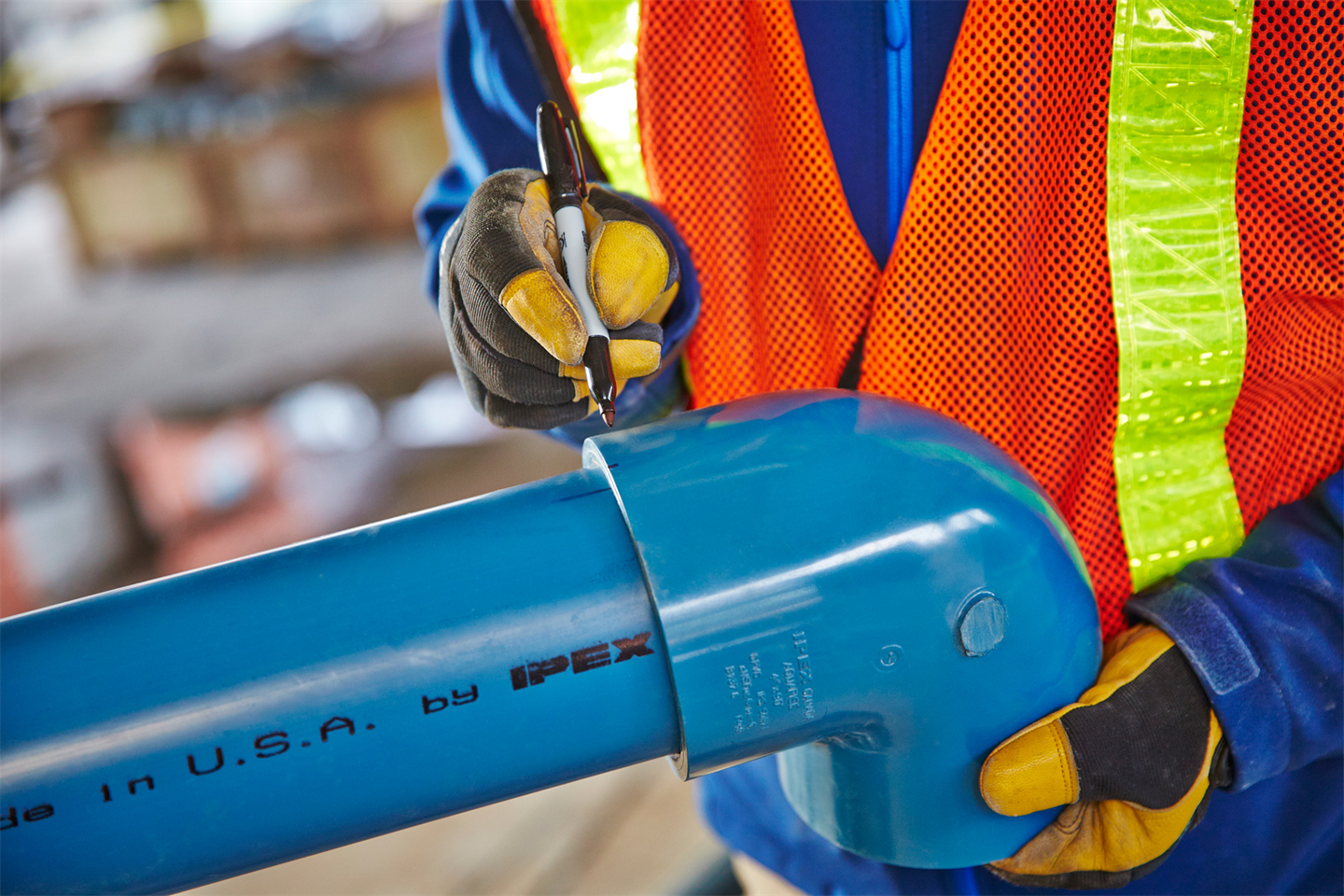
IPEX Bionax - Model CIOD -PVCO Pipe
Bionax has almost double the strength of conventional PVC and three times the impact absorption capability.
- Larger internal diameters increase flow rates and reduce pumping costs
- Higher cyclic fatigue resistance for forcemain applications
- Reduced surge pressure
When IPEX first introduced Bionax PVCO pressure pipe in North America in 2008, it set a new standard for municipal water distribution and made everything else seem antiquated. Since then, thousands of metres of Bionax have been laid in hundreds of installations and it is specified as a material of choice in jurisdictions from coast to coast.
Now, with the introduction of larger diameters, municipal water transmission projects can benefit from the same properties that put Bionax water distribution lines and sewage force mains in a class by themselves.
- This specification provides the requirements for molecularly oriented polyvinyl chloride (PVCO) pipe for potable-water systems and other pressure-pipe applications.
MATERIALS
- PVCO pipe shall be manufactured from rigid polyvinyl chloride (PVC) compound meeting the requirements of ASTM D1784 cell class 12454B.
- Gaskets shall meet ASTM F477 for high-head applications.
HYDROSTATIC DESIGN BASIS
- Starting-stock PVC pipe shall have a hydrostatic design basis (HDB) of 4,000 psi.
- Finished PVCO pipe shall have an HDB of 7,100 psi.
PIPE
- Pipe shall be biaxially oriented (molecularly oriented in hoop and axial directions).
- Pipe shall be produced with cast-iron-pipe outside diameters (CIOD) in all sizes.
- Pipe shall be joined by integral-bell gasketed joints conforming to ASTM D3139.
- Pipe spigot ends shall be chamfered by the manufacturer.
- Pipe ends shall be capped at the production facility prior to storage and shipping.
- Pipe shall be color-coded blue.
CIOD CERTIFICATIONS
- PVC compound shall be CSA-certified to ASTM D1784 cell-class 12454B.
- PVCO pipe shall be CSA-certified to CSA Standard B137.3.1 and third-party certified to NSF
Standard 14 and AWWA Standard C909.
- PVCO pipe joints shall be third-party certified to ASTM D3139.
STANDARDS
PVCO pipe shall conform to the following standards: • ANSI/NSF Standard 14: Plastic Piping
System Components and Related Materials
- ANSI/NSF Standard 61: Drinking Water System Components – Health Effects
- ASTM D1784: Rigid Polyvinyl Chloride (PVC) Compounds
- ASTM D3139: Joints for Plastic Pressure Pipes Using Flexible Elastomeric Seals
- ASTM F477: Elastomeric Seals (Gaskets) for Joining Plastic Pipe
- AWWA C909-09: Molecularly Oriented Polyvinyl Chloride (PVCO) Pressure Pipe, 4 Inch
Through 24 Inch (100 mm Through 600 mm)
- CSA B137.3.1: Molecularly oriented polyvinyl chloride (PVCO) pipe for pressure applications
- BNQ 3624-500 certification protocol to CSA B137.3.1
Bionax® PVCO Pipe (CIOD)
Material PVCO
Size Range 4" – 30" (100mm – 750mm)
Pressure Ratings
73oF / 23oC for 165 psi
73oF / 23oC for 235 psi
73oF / 23oC for 305 psi
CSA B137.3.1 certified CIOD
AWWA C909
FM approved
NSF Std. 14 certified
NSF Std. 61 certified
BNQ NQ 3660-950*
Municipal Transmission Mains
Municipal Distribution Mains
Sewer Forcemains
Short Form Specification
This specification provides the requirements for molecularly oriented polyvinyl chloride (PVCO) pipe for potable-water systems and other pressure-pipe applications.
MATERIALS
• PVCO pipe shall be manufactured from rigid polyvinyl chloride (PVC) compound meeting the requirements of ASTM D1784 cell class 12454B.
• Gaskets shall meet ASTM F477 for high-head applications.
HYDROSTATIC DESIGN BASIS
• Starting-stock PVC pipe shall have a hydrostatic design basis (HDB) of 4,000 psi.
• Finished PVCO pipe shall have an HDB of 7,100 psi.
PIPE
• Pipe shall be biaxially oriented (molecularly oriented in hoop and axial directions).
• Pipe shall be produced with cast-iron-pipe outside diameters (CIOD) in all sizes.
• Pipe shall be joined by integral-bell gasketed joints conforming to ASTM D3139.
• Pipe spigot ends shall be chamfered by the manufacturer.
• Pipe ends shall be capped at the production facility prior to storage and shipping.
• Pipe shall be color-coded blue.
CIOD CERTIFICATIONS
• PVC compound shall be CSA-certified to ASTM D1784 cell-class 12454B.
• PVCO pipe shall be CSA-certified to CSA Standard B137.3.1 and third-party certified through NSF Standard 14 to AWWA Standard C909 and ASTM F1483.
• PVCO pipe joints shall be third-party certified to ASTM D3139.
STANDARDS
PVCO pipe shall conform to the following standards:
• ANSI/NSF Standard 14: Plastic Piping System Components and Related Materials
• ANSI/NSF Standard 61: Drinking Water System Components – Health Effects
• ASTM D1784: Rigid Polyvinyl Chloride (PVC) Compounds
• ASTM D3139: Joints for Plastic Pressure Pipes Using Flexible Elastomeric Seals
• ASTM F1483: Molecularly Oriented Polyvinyl Chloride (PVCO) Pressure Pipe
• ASTM F477: Elastomeric Seals (Gaskets) for Joining Plastic Pipe
• AWWA C909-09: Molecularly Oriented Polyvinyl Chloride (PVCO) Pressure Pipe, 4 inch through 24 inch (100 mm through 600 mm)
• CSA B137.3.1: Molecularly oriented polyvinyl chloride (PVCO) pipe for pressure applications
• BNQ 3624-500 certification protocol to CSA B137.3.1”