


- Home
- Companies
- IXRF Systems Inc
- Products
- IXRF - Model SEM/EDS and SEM/EDX - ...
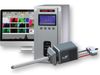
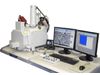
IXRF - Model SEM/EDS and SEM/EDX -Energy Dispersive X-ray Spectroscopy for Scanning Electron Microscopes
Energy-dispersive spectroscopy (EDS, EDX, EDXS or XEDS), sometimes called energy dispersive X-ray analysis (EDXA) or energy dispersive X-ray microanalysis (EDXMA), is an analytical technique used for the elemental analysis or chemical characterization of a sample. It relies on an interaction of an electron beam (e– beam) and a sample within a Scanning Electron Microscope (SEM) instrument. Its characterization capabilities are due in large part to the fundamental principle that each element has a unique atomic structure allowing a unique set of peaks on its electromagnetic emission spectrum (which is the main principle of spectroscopy). The peak positions are predicted by the Moseley’s law with accuracy much better than experimental resolution of a typical SEM/EDS or SEM/EDX instrumentation.
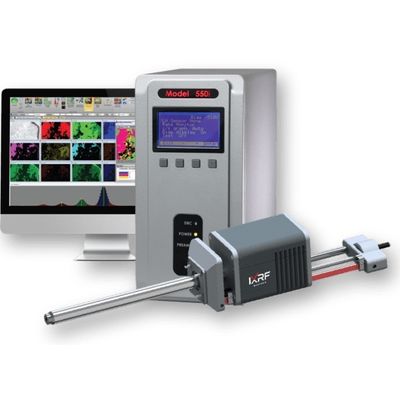
For Scanning Electron Microscopes (SEM), we offer a complete SEM/EDX system: SDD detector, digital signal processor and software. Our all-inclusive, high-end, Windows®-10 based software suite – Iridium Ultra – features a myriad of spectra, mapping, imaging, and advanced automation and analysis tools. IXRF Systems’ SEM/EDS packages deliver premium detector technology as well as both industry-leading and unique (to IXRF) features.
Silicon Drift Detectors (SDD) are available with a choice of window materials, from Beryllium (8µm) to Thin Polymer (for light element x-ray transmission). Sensor active areas of 10mm² to 100mm² are offered. In addition, all or our SDD versions are vibration free.
IXRF’s range of electronically cooled (LN2 free) SDD are optimized when coupled with an innovative Ethernet-based digital pulse processor. Our SDD detectors provide exceptional and stable performance over a wide range of input count rates.
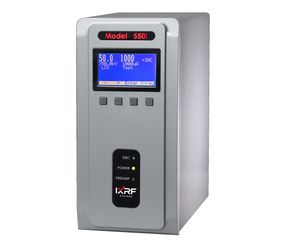
Our Model 550i SEM/EDS digital electronics are optimized for true “data streaming” and ultra-fast X-ray processing. System incorporates Active Imaging combined with Digital Signal Processor (DSP) and a 4096 multi-channel analyzer (MCA).
- Archeology/Museums
- Museum artifacts and currency
- Metals and alloys
- Gemstone inclusions
- Painting authenticity/dating
- Paints, inks, pigments
- Corrosion products
- Biomedical devices/implants
- Solar cells
- Optical filters
- Manufacturing
- Pathology
- Pharmaceuticals
- Semiconductor
- RoHS, WEEE, and ELV compliance
- Geological
- Meteorites
- Phase boundaries
- Mineral identification
- Mining test cores
- Electronics
- Glasses
- Building materials (concrete, cement)
- Packaging
- Medicine/Biology
- Bones/tissue
- Leaves/plants
- Implants
- Particle Analysis
- Environmental analysis
- Lead contamination in consumer goods
- Soil contamination
- Material characterization for recycling
- Marine/ocean sediments
- Airborne particles/air filters
- Slurry
- Forensic Science
- Glass Chips
- Paint cross sections
- Inks/pigments
- Soils/stones
- Gun shot residue
- Material identification