

- Home
- Companies
- IXRF Systems Inc
- Products
IXRF Systems Inc products
EDS & XRF for Electron Microscopy
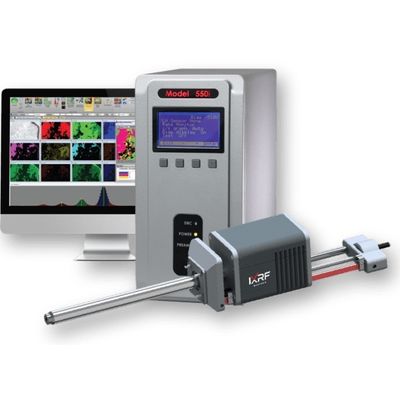
IXRF - Model SEM/EDS and SEM/EDX - Energy Dispersive X-ray Spectroscopy for Scanning Electron Microscopes
Energy-dispersive spectroscopy (EDS, EDX, EDXS or XEDS), sometimes called energy dispersive X-ray analysis (EDXA) or energy dispersive X-ray microanalysis (EDXMA), is an analytical technique used for the elemental analysis or chemical characterization of a sample. It relies on an interaction of an electron beam (e– beam) and a sample within a Scanning Electron Microscope (SEM) instrument. Its characterization capabilities are due in large part to the fundamental principle that each element has a unique atomic structure allowing a unique set of peaks on its electromagnetic emission spectrum (which is the main principle of spectroscopy). The peak positions are predicted by the Moseley’s law with accuracy much better than experimental resolution of a typical SEM/EDS or SEM/EDX instrumentation.
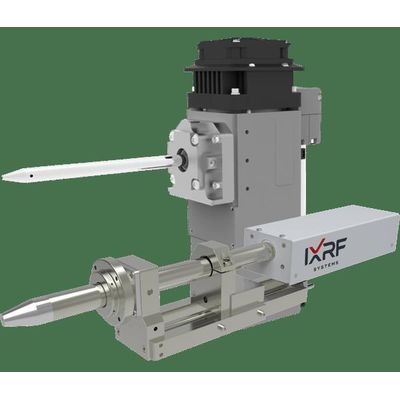
Model SEM-XRF - X-ray Sources for Electron Microscopy (SEM)
microXRF X-ray sources for Scanning Electron Microscopes (SEM): addition of an polycapillary X-ray tube and Iridium Ultra software will transform your SEM’s quantitative analytical capabilities. Higher peak to background ratios enable greater elemental sensitivity for higher Z elements: sensitivity exceeding e–-beam excitation by a factor of 10-1000X. Exceptional beam stability, together with a modern SDD X-ray detector, afford higher precision with ppm-level sensitivity. Non-conductive materials may be analyzed without any special preparation or coating. We integrate with your SEM to deliver full spectrum analysis using excitation from both the e–-beam and our X-ray source.
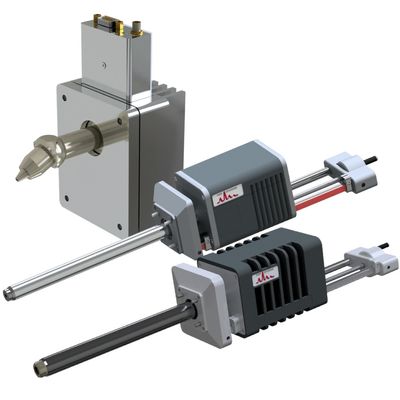
IXRF - Model SDD - Silicon Drift Detectors
IXRF’s range of electronically cooled (LN2 free) Silicon Drift Detectors (SDD) are optimized when coupled with our innovative Ethernet based 550i digital pulse processor. Specifically configured to each customer`s scanning electron microscope (SEM), IXRF`s SDD detectors provide exceptional and stable performance over a wide range of input count rates to produce rapid X-ray fluorescence elemental maps. The SDD detector is available in both EDS (SEM mounted with slide assembly) and XRF (various designs, no slide) formats. Choices of window materials are available, from Beryllium (8µm) to Thin Polymer (for light element x-ray transmission) and sensor active areas of 10mm² to 100mm² are offered. In addition, all or our SEM SDD versions are vibration free.
micro-XRF µXRF / µEDXRF
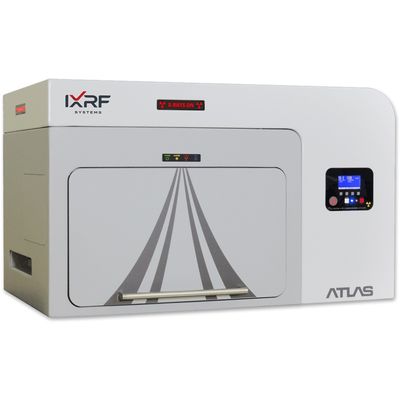
IXRF - Model ATLAS M - Benchtop micro XRF Spectrometer
IXRF Systems’ ATLAS M benchtop microEDXRF (micro XRF) spectrometer is the latest general-purpose micro spot energy dispersive X-ray fluorescence (EDXRF) spectrometer microscope for the measurement and mapping of elements from sodium (Na) through uranium (U). Designed to image and analyze a wide variety of sample types, ATLAS leads the industry in virtually every major specification category, from the most powerful software and the highest detector active area to our superior perpendicular (normal) X-ray tube geometry and smallest micro spot.
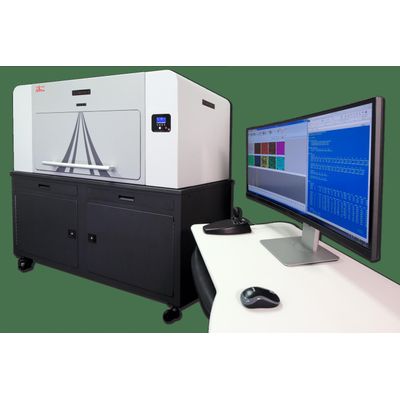
Model ATLAS X - micro XRF Spectrometer
IXRF Systems’ ATLAS X mainframe micro-XRF spectrometer is the latest general purpose micro/small spot energy dispersive X-ray fluorescence (μXRF) spectrometer for the measurement and imaging/mapping of elements from sodium (Na) through uranium (U). Designed to image and analyze a wide variety of sample types, ATLAS leads the industry in virtually every major specification category from the most powerful software and the largest detector active area, to our superior perpendicular geometry and tiny 5 μm diameter micro XRF spot.
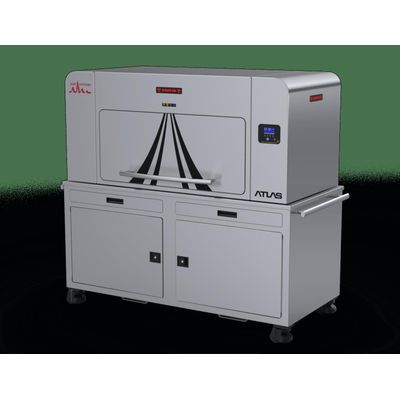
Model ATLAS SEMI - micro EDXRF Metrology Tool
IXRF Systems’ ATLAS SEMI is the very latest micro spot energy dispersive X-ray fluorescence (micro XRF) imaging spectrometer for semiconductor metrology. Designed to image and analyze (edge-to-edge) wafers up to 300 mm diameter, ATLAS leads the industry in virtually every major specification category from the largest chamber and the highest detector active area, to the longest mapping travel and smallest X-ray micro-spot.