


J. Huesa Water Technology
- Home
- Companies
- J. Huesa Water Technology
- Products
- J. Huesa - Nanofiltration System
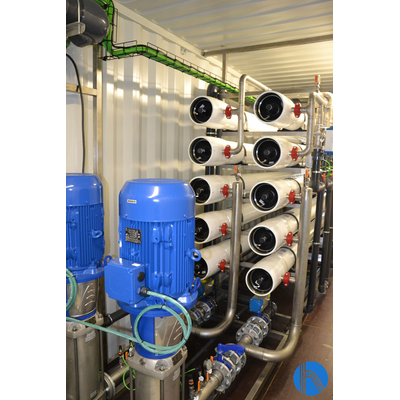
J. Huesa - Nanofiltration System
Nanofiltration is a membrane filtration process that takes place in a porosity range between 150-500 Dalton, depending on the molecular structure (pore size around 1 nm), which achieves, among other things, the separation of polyvalent ions with an effectiveness of more than 95 %, as well as organic matter of low molecular weight (sugar, proteins, etc.).
Most popular related searches
heavy metals wastewater
reverse osmosis industry
metal wastewater
water softener
wastewater recycling
feed water
heavy metals
tubular membrane
water softening
nanofiltration system
There are a variety of membrane types on the market, making it possible to achieve a variety of different qualities for final product. It is worth mentioning:
- Membranes with a spiral configuration: they consist of a group of membranes wound together over a tube that collects the permeate; in this case the water flows from the outside to the inside. They are more compact units and are used when high quality ultrapure water is required.
- Tubular membranes: in this case, the tube-shaped membranes are placed on a support that acts as a collector. The flow goes from the inside to the outside, and use is more widespread, due to its greater strength.
The main uses of this technology are:
- As a pretreatment for other processes, e.g., reverse osmosis
- Industrial process feed water
- Separation of heavy metals
- Wastewater reuse
- Water softening (removes calcium, magnesium, and sulfate ions, among other things)
- Reuse of brine
Some of the advantages of this treatment system are:
- Compact plants (they take up less space)
- Low pressure requirement