

- Home
- Companies
- PULSCO Inc.
- Products
- PULSCO - Model ILS-920 - Line Silencer
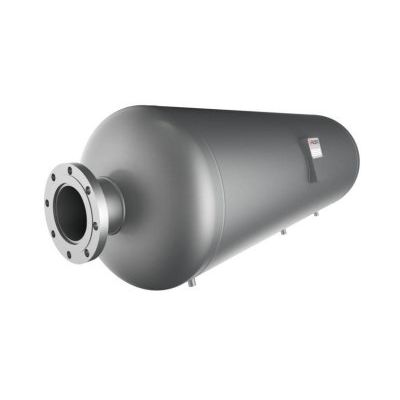
PULSCO - Model ILS-920 -Line Silencer
Our Line Silencers are used to control noise produced by valves in piping systems. The line silencer is close-coupled with the control or pressure reducing valve and reduces the aerodynamic noise resulting from gas or vapor turbulence. In addition to providing the required back pressure on the valve, each line silencer is designed to attenuate the noise level by 25 dBA.
PULSCO’s Silencers reduce low frequency noise by shifting the noise to higher frequency by flowing through the diffuser. High frequency noise is then efficiently absorbed by the acoustic packing in the tube module, resulting in a much quieter venting to atmosphere. As complying with government ordinances with noise levels in the workplace, PULSCO silencer will protect employees from excessive plant noise.
Because PULSCO’s Line Silencer combines the acoustic benefits of diffusive and absorptive silencing, maximum attenuation can be achieved in a shorter silencer length.
Typical applications for PULSCO’s Line Silencers are:
- Boiler Startup & Shut Down Systems
- System Purge
- Control Valves
- Centrifugal Compressors
PULSCO Line Silencers are pressure vessel designed, fabricated, and stamped in accordance with ASME Section VIII, Div. 1 Pressure Vessel Code.
- Flanged inlet/outlet connection (ANSI B 16.5)
- Supports for vertical mounting
- Saddle supports for horizontal mounting
- Special material & finishes for high temperature and/or corrosive applications
For a corrosive environment, components or complete silencers can be constructed from a 300 Series Stainless Steel (usually 304 or 316). For oxygen service, Monel or a Monel/300 series steel combination is usually used together with special cleaning and degreasing procedures.
- Economical high temperature black paint is available for temperatures above 800° F.
- Zinc rich primer (Carbonline Carbozinc 11) is standard with our silencers.
Provides energy dissipation and modification of the noise spectrum for easier attenuation. It also provides the back pressure required for optimum valve performance and size at a specific flow rate.