
Specac - Model Cyclone -Long Pathlength Gas Cell
The cyclone is a standard long pathlength gas cell accessory designed with Borosilicate glass body and gold mirrors which are protected. They have been optimized using the latest optical modelling tools to give maximum signal-to-noise.
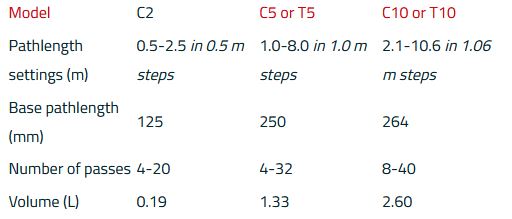
- Configurable long pathlength There are made to a specified pathlength within the ranges described below. Each of the four bodies permits a different range and has a different internal volume.
- Adjustable mirror There is adjustable mirror carriage which can be fitted to Cyclone™?cells to enable the user to vary the pathlength throughout the specified range.
Features
- Wide pathlength range (1m - 10m)
- Vacuum to 15 p.s.i. operation
- Ambient temperature operation
- Borosilicate glass body
- Anodised components
- Gold mirrors (protected)
- Viton or Kalrez `O` ring seals
- KBr, CaF2 or ZnSe windows
- Purgeable transfer optics box
- Benchmark series baseplate mounting
Optional Features
- Additional mirror carriage assemblies
- Vacuum / gas inlet & outlet taps
- Pressure gauge
- Desiccant storage caps
- Purge bellows
Flexible specification long pathlength gas cells | Cyclone™ These cells are available with glass or metal cell bodies and can be set to a range of pathlengths.
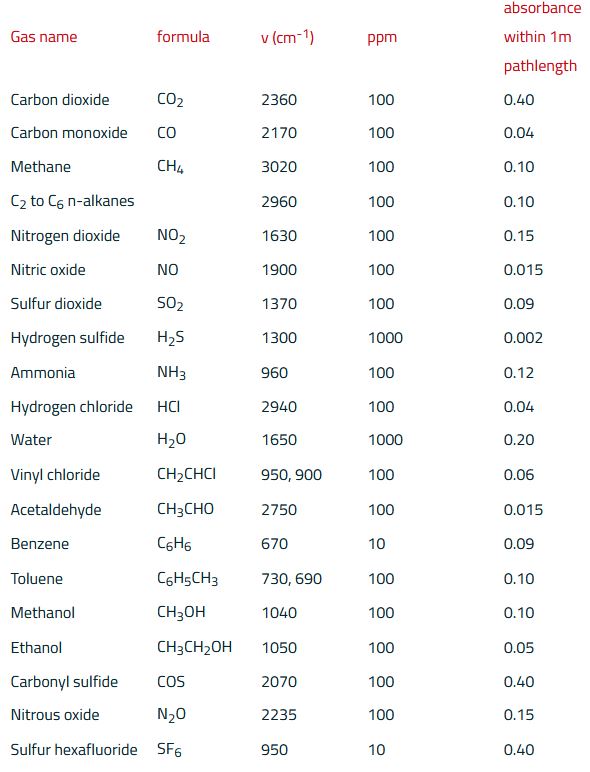
Which pathlength should I choose? The absorbance of a gas depends on the distance travelled by the IR light beam through the gas sample. The relationship between absorbance, A, concentration, C, and pathlength, L, is given by Beer’s Law: A = -log10 (I/I0) = a.C.L Atmospheric concentrations of gases are usually expressed in C.L units of ppm.m – the number of molecules that would be encountered by the infrared beam across a 1.0 m path. A gas at 0.1 ppm atmospheric concentration will absorb as much IR light over a pathlength of 100 m as would the same gas at 1 ppm over 10 meters or at 10 ppm over 1 meter. To achieve optimal results, the pathlength of cell should be chosen to give absorbance values within the spectrometer’s linear range for a given concentration. The following table may be taken as a guide: