


- Home
- Companies
- McLanahan Corporation
- Products
- McLanahan - Filter Presses
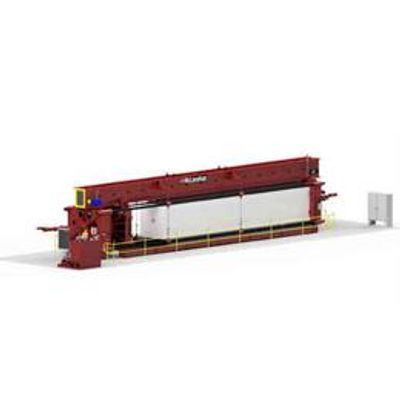
McLanahan - Filter Presses
Filter Presses dewater and separate liquids and solids in a wide range of applications. Due to their versatility and reliability, Filter Presses are one of the most widely used pieces of equipment in liquid-solid separation. They dewater material and separate liquids and solids by pumping the slurry into a series of empty chambers that are formed by the plates of the filter press. Each plate is lined with filter media, which determines what particles are dewatered and separated from the liquid. McLanahan Filter Presses provide customers in many industries with proven technology that is capable of producing a drip-free cake from mining and aggregate tailings, mineral concentrates, and a wide range of waste materials through mechanical dewatering.
McLanahan Filter Presses are designed to generate easily managed dry product or waste material. The Filter Press also provides the ability to optimize the recovery of clean, reusable water. McLanahan Filter Presses can address many typical issues associated with fine material processing,including full slurry ponds/dams, high material handling equipment repair costs, limited expansion capabilities, environmental permit restrictions, high waste material handling costs and limited water availability.
McLanahan Filter Presses are used by many 24/7 operations that rely on machine performance and excellent support to keep their plants running and profitable.
McLanahan Filter Presses are engineered using a single hydraulic cylinder. This results in robust and reliable automation capabilities with lower horsepower, fewer control valves and less complexity than multi-cylinder designs. McLanahan’s Overhead Beam style results in faster opening and closing for greater production and better cake release in tailings applications. It also provides larger plate openings for better cleaning and maintenance access. McLanahan’s Side Beam style is designed for concentrates and smaller tailings applications while providing fast plate/cloth removal. It is also more transportable for modular or portable applications.
Unlike the traditional plate and frame presses, McLanahan’s Filter Press line features modern recessed plates or membrane plates, both of which create a chamber for dewatering the slurry without trapping the cakes within the frames. This allows the dewatered cakes to discharge more easily than with traditional plate and frame presses.
Due to the variability in permeability and surface area, each site’s material should be tested prior to sizing a Filter Press for a specific customer application. McLanahan offers experienced lab and on-site pilot testing with a wide range of testing capabilities. Other parameters are used for greenfield sites when testing isn’t possible.
McLanahan’s Customer Service Team offers a wide range of fast spare parts sourcing as well as routine and emergency maintenance service support. All McLanahan Filter Presses can have customer remote control access capability for efficient monitoring and troubleshooting.
How Filter Presses WorkA Filter Press is composed of a support structure holding a series of recessed plates lined with filter cloths. Hydraulic pressure is used to hold the recessed plates tightly together, creating a seal around their perimeters and void spaces between the plates. A high-pressure slurry pump forces slurry into the empty chamber spaces between the plates for dewatering. The slurry solids are captured between the plates, while the clean filtrate water passes through the filter cloth mesh and exits through ports in the filter plates. When the chamber spaces are full of dewatered slurry solids, the slurry feed pump is automatically stopped. The hydraulic pressure holding the plates together is released so the plates can be separated individually, allowing the dewatered solid material cakes to fall by gravity out of the press.
Many people think the filter plates are squeezed together to expel water, but the press never moves during the time of dewatering. The only movements involved occur when the plates separate to expel the dry cakes or close to begin a new process cycle. Plates simply connect to form a seal under hydraulic pressure while the feed pump supplies the necessary pressure to dewater the fine solids.
Filter Presses are designed for simple and limited movement. This design leads to high-levels of automation and reliability. Compared to competing dewatering technologies, higher levels of water removal can be achieved with the Filter Press because the material being dewatered is captured between the recessed plates under the highest possible pump pressures. The Filter Press is also designed for the specific application by selecting the cycle times, cake thickness, feed pressures and plate styles to achieve optimum dewatering efficiencies.
Applications ideal for Filter Presses include: tailings or effluent from a mine or aggregate wash plant, mineral concentrates and most underflow slurries from industrial, agricultural or mineral processes coming from a Thickener or clarifier process.
- Designed based on customer material testing and specific customer needs
- Plates sizes available range from 630mm by 630mm to 2.0m by 2.5m
- Recessed/membrane plate count from 15 to 195 plates depending on cake thickness
- Typical slurry feed pressure of 100 to 225 psi
- Cake thickness between 15mm and 50mm
- Dual slurry feed inlets lower inlet velocity and results in less wear on filter cloths
- Open filtrate design allows for simple and rapid identification of bad filter cloths
- Filter cloths with VELCRO® over traditional zip-ties for easy replacement
- Allen Bradley programmable logic controller with fully automated controls and remote monitoring/assistance
- Wider plate openings allow for better cake release and easier inspection and maintenance
- Core blow valves recycle residual non-dewatered feed slurry prior to cake discharge to ensure the driest possible cakes