


- Home
- Companies
- Messkonzept GmbH
- Products
- Messkonzept - Model FTC130-OEM - ...
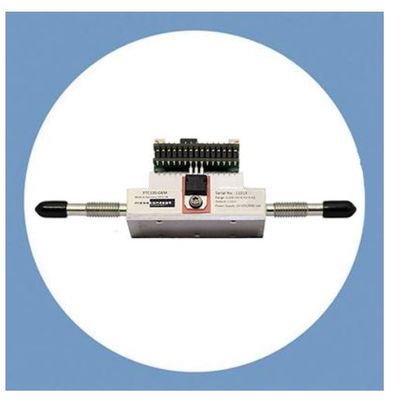
Messkonzept - Model FTC130-OEM -Installation Detectors for Customized Solutions
The FTC130-OEM is a high precision and stable thermal conductivity detector (TCD). It is designed for customers who use their own enclosures to ensure the desired degree of protection and thermal and electrical shielding. In terms of metrological properties, it is equivalent to the FTC130 if the installation rules are adhered to.
Manual adjustment and parameterization at the detector are not provided. The signals can be output via analogue voltage outputs (0-10V). The measured data can also be read out via UART module, which works on the TTL level. An RS232 interface can be generated by means of a commercially available level converter. The operation, parameterization, configuration and data recording can be done via this interface using the Windows® based utility SetApp 2.0, which is available free of charge.
The FTC130-OEM provides a highly effective routine for cross-sensitivity compensation, which can be flexibly adapted to the respective measurement task. It requires as an input external voltage signal, which represents the concentration of the cross-sensitivity causing gas components.
General:
- Measurement process Thermal conductivity
- Sampling OEM
- Connection 6mm pipe
- Dimensions (WxHxD in mm) 144x42x40
- Protection class None
- Pressure-proof to 20 bar absolute
- Power supply 18V to 36V DC / 700mA
- Ambient temperature range -20°C to 50°C
- Weight to 305 g
- T90 time at 60l/h < 1sec
Communication:
- RS232 Yes
- Current output —
- Voltage output 2 x 0-10V
- Display —
- Relays —
- Service program SetApp 2.0 Yes
- Calibration on site Yes
Options
- Flow measurement —
- Flow monitor —
- Infrared measurement —
- Multi Gas Mode Yes
- Protection against corrosion Yes
- Protection against condensate and dust Yes
- Suitable for inflammable gases customer responsibility
- Moisture measurement —
- Cross-sensitivity compensation —
Specifications gas analysis
- Noise < 1% of smallest range
- Drift at zero point per week < 2% of smallest range
- Repeatability < 1% of smallest range
- Non-linearity < 1% of range
- Measuring error with ambient temperature change per 10°K < 1% of smallest range
- Flow influence between 60l/h and 90l/h per 10l/h < 1% of smallest range
- Fault with measurement gas change (Pabs > 800 hPa) per 10 hPa < 1% of smallest range