


- Home
- Companies
- Fluid Handling Technology, S.A.
- Products
- FHT Valves - Metal-Metal Floating Ball ...
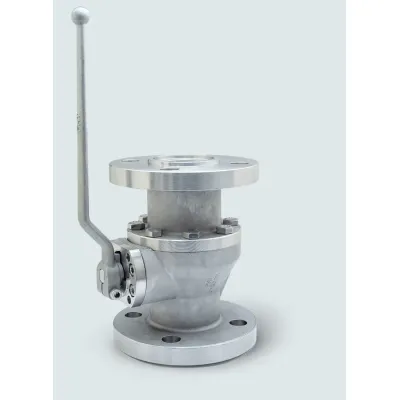
FHT Valves - Metal-Metal Floating Ball Valves
Metal-metal floating ball valves are designed to control fluid flow through a mechanism operated by a shaft linked to the ball, enabling a 90-degree rotation to open or close the valve. This design allows for a tight seal as the downstream flow pressure pushes the ball against the seat. However, in low-pressure environments, seat wear may impact sealing effectiveness, as there may be insufficient pressure to maintain a tight seal. Metal seats are suitable for corrosive environments and high temperatures, coping well with solid particulates. While metal-seated valves typically endure harsher conditions such as acids, high temperatures, and mechanical shock better than soft-seated valves, they can exhibit more leakage than soft-seated options. Commonly used materials include copper alloys for low-pressure applications and nickel-based alloys for corrosive mediums. These valves generally have a higher cost due to their robust material requirements.
Floating ball valves are operated by a shaft attached to the top of the ball and rotate it 90 degrees (called a quarter turn). As the ball rotates, the passage is opened or closed, releasing or stopping the flow of fluid. As the ball rotates on its axis, the pressure of the flow pushes the ball against its downstream seat, creating a tight seal. Because of this, floating ball valves may not seal as effectively in very low pressure applications after some seat wear has occurred. This is because there may not be enough pressure to push the ball against the downstream seat to create a tight seal. However, in most applications the downstream pressure is sufficient to maintain a tight seal long after the seats have begun to wear.
Metal Seat
Metal seats are suitable for corrosive environments and products, as well as for elevated temperatures. They are also suitable seats where solid particles are present. Copper alloy, for example, is a suitable material for low-pressure valves. Nickel-based alloys are often the ideal choice for corrosive media. Depending on the type of material, these valves can generally withstand harsher conditions than soft-seated valves, including acids, heat, abrasives, hydraulic shock, erosion, corrosion and pressure.
Metal seated valves generally cost more than soft seated valves, but they can also typically leak more than a soft seated valve .
In our ball valve catalogue you can find out about our wide range of products.