


- Home
- Companies
- Droplet Measurement Technologies (DMT)
- Products
- DMT - Model MPS - Meteorological ...
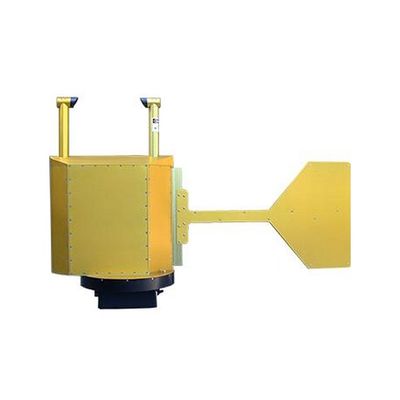
DMT - Model MPS -Meteorological Particle Spectrometer
This precipitation-measuring optical disdrometer, used by the National Weather Service for rain and drizzle research, measures the size distribution, fall velocity, and rain rate of droplets from 50 µm to greater than 6.4 mm.
Highly Detailed Measurements
Identify precipitation type with 2D imaging of precipitation particle sizes and shapes and a 1D histogram of particle sizes. Post processing enables derivation of rainfall rate and intensity.
All-weather Performance
Overcome the elements with optical heads that are heated to prevent the window from becoming coated with fog or frozen precipitation.
Improved Functionality
Rely on the included wind vane to align sample path with wind flow, and use the free-standing swivel-mount for extended versatility.
The MPS utilizes optional PADS software that provides a user-friendly virtual instrument panel. PADS allows the user to control the MPS and display real-time data and logs. For instance, the program enables the user to do the following tasks:
- Sample and record data
- View particle volume and number concentrations, as well as Median Volume Diameter (MVD) and Effective Diameter (ED)
- View LWC as measured by the MPS
- Monitor instrument parameters like MPS laser current and various electronics voltages
- Play back data for post-flight viewing
- Reprocess data with new parameters for additional analysis
- Particle imaging
- Light from a laser diode is shaped into an elliptical beam to illuminate the volume where the drops are detected.
- The light and the shadow of a drop in the beam are then imaged onto a 64-element photo-diode array, such that a 50 micron drop will shadow one element and a 3,200 micron drop would shadow the whole array.
- Measured Parameters : Single-particle light imaging
- Derived Parameters :
- Particle diameter
- Particle number concentration
- Liquid water content (LWC)
- Effective diameter (ED)
- Median volume diameter (MVD)
- Technique : 64-element diode array, 20-cm path length
- Resolution : 25, 50 or 100-micron resolution (specify when ordering)
- Particle Size Range : 50 µm to >6.4 mm (maximum size depends on probe resolution)
- Number Conc. Range : 0 – 2,000 particles/cm3
- Particle-by-particle Fall Velocity : 5 – 500 cm/sec
- Inter-arrival Time of Particles : 0.001 – 100 sec
- Communications : High-speed serial RS-422; USB
- Software : Optional PADS software provides data analysis tools to display, record and play back data
- Power Requirements :
- Powered by 115 V / 60 Hz or 230 V / 50 Hz (specify when ordering)
- Power consumption: 200 W
The Particle Analysis and Display System (PADS, right) is optional software that provides a user-friendly virtual instrument panel.
PADS allows the user to control the MPS and display real-time data and logs. For instance, the program enables the user to do the following tasks:
- Sample and record data
- View particle volume and number concentrations, as well as Median Volume Diameter (MVD) and Effective Diameter (ED)
- View LWC as measured by the MPS
- Monitor instrument parameters like MPS laser current and various electronics voltages
- Play back data for post-flight viewing
- Reprocess data with new parameters for additional analysis
The Lifecycle Care Program ensures MPS integrity and performance vital to your research mission for 3 years or 3 calls (whichever comes first). When conducting complex and time intensive laboratory or field measurements it is critical to avoid down time, and ensure data collection accuracy. The program consists of 3 key deliverables for each year or call:
- Instrument Logistics
- Instrument Integrity
- Instrument Performance
Lifecycle Care Program Includes:
LOGISTICS
- Shipping to and from Droplet Measurement Technologies facility
- Customs handling, including CARNET ATA if required
INTEGRITY
- Incoming instrument evaluation and health check
PERFORMANCE
- Software and firmware validation
- 100%-unit functionality test
- Calibration data
- Calibration report
- Certificate of calibration
At times, our technician might discover an instrument issue, which might not be covered by the Lifecycle Care Program or by our product warranty. In such case we will reach out to you with a service & repair estimate to allow you to provide us with the next steps of action.