
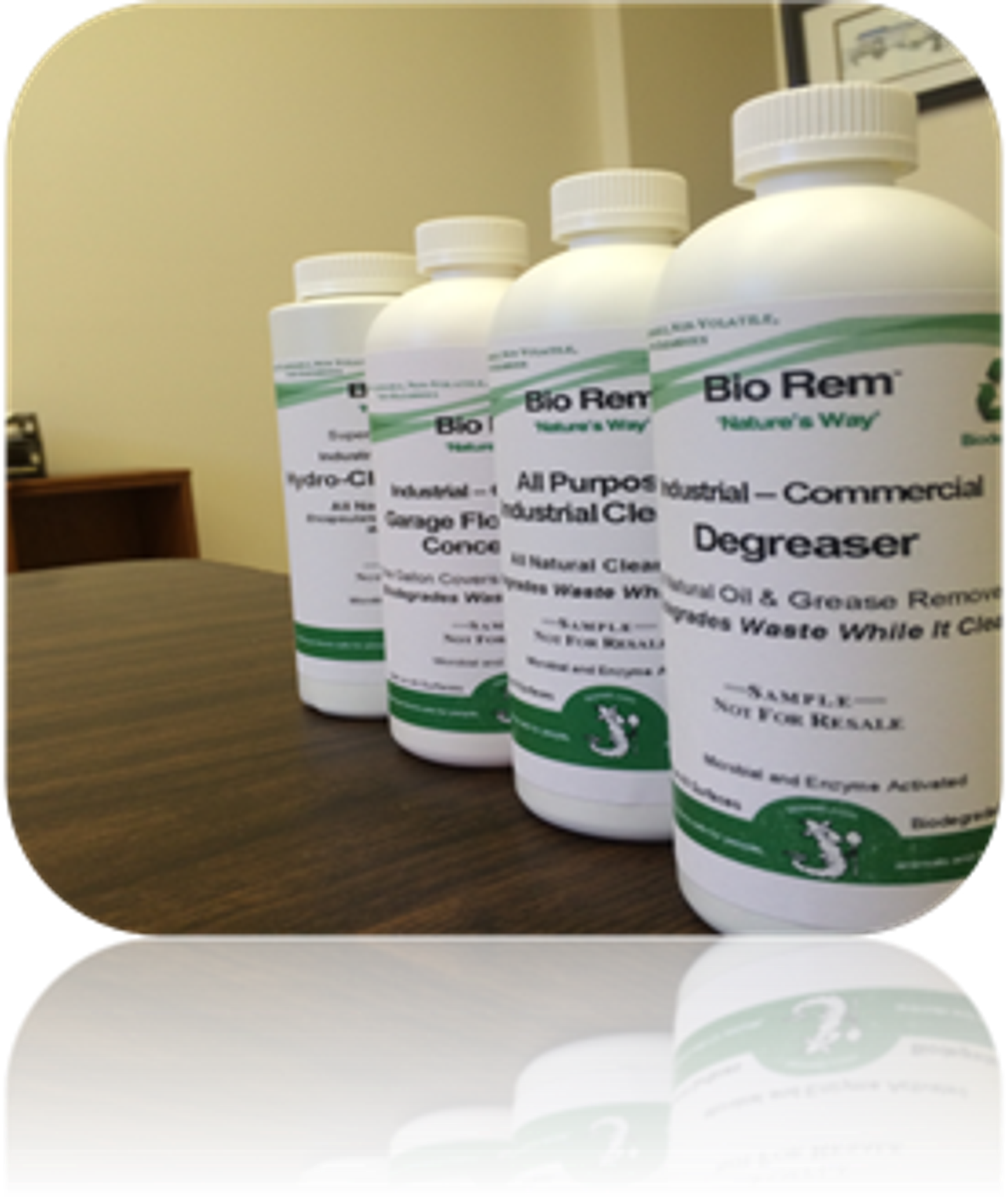

Bio-Rem - Model H-10 -Microbes
The strains that have been identified by Bio Rem, which are not genetically altered, have been named and are known as microaerophillic. H-10 is a formulation of specialized 100% natural occurring microaerophillic bacteria, which depend on hydrocarbons for their proper growth.
It is a proprietary blend of microaerophillic bacteria and micronutrients. The strains are cultivated, fermented and harvested. Nutrients are added to provide growth. The nutrients will provide nitrogen, phosphorus and potassium for growth. Finally, wheat germ is used as a shipping media. The product is then dry packaged in five-gallon plastic lined pails for shipping. For purposes of identification the product has been named Bio Rem’s H-10™ formula. The formula does not require the addition of oxygen or oxygen producing compounds (ex: hydrogen peroxide). The microorganisms are called “microaerophillic” because they utilize the available oxygen contained in the subsurface soil and the groundwater. Only a natural water source is used to initialize and grow the cultures on site. When this bacteria is properly applied, the contamination is digested over a period of time until the food source is gone and the problem is solved. Bio Rem’s H-10™ is non-harmful to the environment, plants, animals, and people.
Bio Rem’s H-10™ contains a specially formulated range of microaerophillic microorganisms and selected micronutrients. The selected micronutrients are consumed during the propagation phase, prior to placing the bacterial cultures into the subsurface contaminant plume. These selected micronutrients do not contain any nitrates, nitrites, or phosphates. Bio-Rem’s H-10 was developed for use in bioremediation.
Bio Rem developed a process called Augmented In Situ Subsurface Bioremediation. This process allows for the direct placement of the H-10 cultures into a contaminant plume. This offers distinct advantages over other types of bioremediation and other clean-up methodologies. Direct placement reduces costs, provides for ease of remediation, and eliminates the contaminant via degradation and decomposition of the contaminant. PRP (Potentially Responsible Party) liability is removed when a site is truly “cleaned” not merely “Hauled Away”.
When Bio-Rem’s H-10™ is applied in accordance with Bio-Rem’s procedure, H-10™ fully complies with Title I of the 1990 Clean Air Act Amendments. Unlike aeration or incineration, no organic volatiles are released into the air. Thus Bio-Rem H-10™ is environmentally responsible.
Bio-Rem H-10™ was developed through the use of selective adaptation techniques, which obtained naturally occurring strains of microorganisms with enhanced biodegradation capabilities.
The Bio-Rem H-10™ cultures are naturally occurring pseudomonades and bacillus. As these cultures are microaerophillic, they perform utilizing the available levels of oxygen in soil and groundwater. NO “Air Sparging”, hydrogen peroxide, or other oxygen adding techniques are required. This process also eliminates the need for constant tilling in above ground bioremediation or land farming. Constant re-application of nutrients and cultures are not required.
Upon completion of bioremediation of a site, the degradation components of the Bio-Rem Augmented In Situ Subsurface Bioremediation Process consist of carbon dioxide, water, and residual biomass.
Complete safety information is contained in the MSDS sheet for Bio-Rem’s H-10™ Product.
- Ingredients: Viable Bacterial Cultures
- Volatility: Non-volatile
- Flammability: Non-flammable
- Temperature
- Range for Use: 38 degrees F to 120 degrees F.
- Salinity
- Tolerance: 0.0% to 6.0%
- Ph Tolerance
- Range: 5.0 to 9.0
- Storage and Handling: Do not freeze. Avoid exposure to temperature above 100 degrees F. Keep product dry. Avoid generating large quantities of dust.