


- Home
- Companies
- Genex Utility Management Pvt. Ltd.
- Products
- Genex-Utility - Microfiltration ...
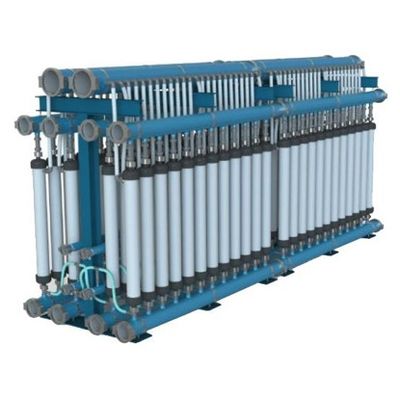
Genex-Utility - Microfiltration Membranes (MF)
Microfiltration (MF) is a pressure-driven separation process, which is widely used in concentrating, purifying or separating macromolecules, colloids and suspended particles from solution. MF membranes typically have nominal pore sizes on the order of 0.1–1.0 μm. MF processing is widely used in the food industry for applications such as wine, juice and beer clarification, for wastewater treatment, and plasma separation from blood for therapeutic and commercial uses. In biotechnology industries, MF concerns applications such as cell recycle and harvesting, separation of recombinant proteins from cell debris, and purification of process streams.
MF is usually operated at relatively low TMPs (4 bar or 0.4 MPa) in a cross-flow configuration. The feed stream flows tangentially to the membrane surface to prevent cake formation and hence fouling of the membrane. The operation of cross-flow MF is often limited by membrane fouling caused by suspended solids in the feed stream. Permeate flux decreases with time as the retained particles accumulate on and within the membrane. Accumulation of cells, cell debris or other rejected particles on the membrane surface (external fouling or cake formation) is usually reversible, while deposition and adsorption of small particles or macromolecules within the internal pore structure of the membrane (internal fouling) is often irreversible.
Membranes with a pore size of 0.1 – 10 µm perform micro filtration. Microfiltration membranes remove all bacteria. Only part of the viral contamination is caught up in the process, even though viruses are smaller than the pores of a micro filtration membrane. This is because viruses can attach themselves to bacterial biofilm. Micro filtration can be implemented in many different water treatment processes when particles with a diameter greater than 0.1 mm need to be removed from a liquid.
- Algae
- Bacteria
- Pathogenic protozoa (Giardia lamblia and Crypotosporidium)
- Sediment (sand, clay, certain complex metals/particles)
Examples of micro filtration applications are:
- Cold sterilisation of beverages and pharmaceuticals
- Clearing of fruit juice, wines and beer
- Separation of bacteria from water (biological wastewater treatment)
- Effluent treatment
- Separation of oil/ water emulsions
- Pre-treatment of water for nano filtration or Reverse Osmosis
- Solid-liquid separation for pharmacies or food industries
Both microfiltration and UF purification are useful for water/wastewater treatment in a broad range of industrial and commercial settings. This includes the processing of many kinds of end products. Below are only a few of the many possible applications for each membrane filtering process:
- Cold sterilization of beverages and pharmaceuticals
- Separating bacteria from water, liquid pharmaceuticals, and medicines
- Clarifying fruit juices, wine, or beer
- Petroleum refining
Anyone who has studied at the very least high school level biology (and paid attention) is familiar with the concept of a membrane, in particular a semi-permeable membrane. Biological living cells are wrapped in semi-permeable membranes that keep their functions separate from the surrounding environment. The semi-permeable aspect allows only certain ions and small organic and other molecules to pass into or out of the cell. The membrane can be selective in either a passive or active capacity. Ultrafiltration (UF) and microfiltration (MF) processes utilize a semi-permeable membrane to separate microcontaminants from a water stream.
Microfiltration and UF purification are more alike than they are different. As mentioned in the introduction, they are both non-biological (non-living), membrane-based separation technologies. These system processes work by applying differential pressure across a semi-permeable membrane and that pressure forces water, solutes, and small particulate matter through the membrane while larger solids are retained on the other side.
These processes both also make for beneficial pretreatment steps for reverse osmosis and nanofiltration (RO/NF). Membranes need to be deployed in properly designed systems and sometimes need periodic cleaning so they can last as long as possible without replacement. Filtration and precipitation pretreatment reduces concentrations of larger solid particles and reduce severity of membrane fouling.
The membranes for these microfiltration and UF purification systems are available in the same configurations. Plate and frame, tubular, hollow fiber, and spiral wound are possible options. These different configurations offer their own pros and cons. There are also different materials the membranes can be composed of, namely polymers, ceramic, and a few metal versions.
It all boils down to pore size. On the membrane separation scale, micro- and ultrafiltration are coarser than nanofiltration (NF) and reverse osmosis (RO), but are still finer than media filtration. Although there is not universal agreement, commonly used definitons have microfilter pores within the range of 0.1 to 10 microns and ultrafiltration membrane pores within 0.005 to 0.1 microns. Ultrafiltration membranes are typically rated by the molecular weight of the solids they remove and are typically rated from 5000 to 300,000 molecular weight cut-off. The membrane selected for a treatment system is based on the size of the smallest particles to be retained in the feedwater. The difference in their pore size determines the applications for which ultrafiltration purification or microfiltration treatment process would be the most applicable to be applied for the specific application.