

- Home
- Companies
- IXRF Systems Inc
- Products
- Model ATLAS X - micro XRF Spectrometer
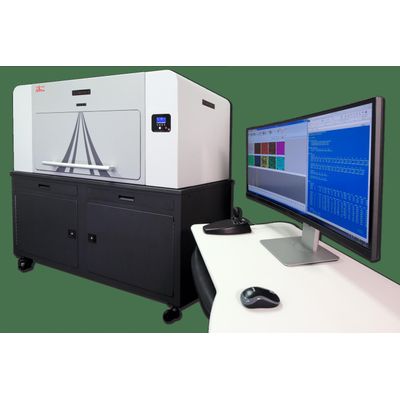
Model ATLAS X -micro XRF Spectrometer
IXRF Systems’ ATLAS X mainframe micro-XRF spectrometer is the latest general purpose micro/small spot energy dispersive X-ray fluorescence (μXRF) spectrometer for the measurement and imaging/mapping of elements from sodium (Na) through uranium (U). Designed to image and analyze a wide variety of sample types, ATLAS leads the industry in virtually every major specification category from the most powerful software and the largest detector active area, to our superior perpendicular geometry and tiny 5 μm diameter micro XRF spot.
ATLAS’ Iridium Ultra software platform, developed with SEM/EDX elemental mapping and analytical functionality, is unsurpassed in it’s ability to provide elemental and phase mapping, line scans, critical dimensions (CD) as well as qualitative and quantitative elemental analyses of solids, liquids, particles, powders and thin films. The functional, flexible, and feature-rich software suite guarantees unprecedented productivity. ATLAS X is the micro-XRF (μEDXRF) elemental analyzer that leads the world with innovation.
Micro X-ray fluorescence (µXRF, µEDXRF, micro-XRF, microEDXRF) spectroscopy is an elemental analysis technique that relies on the same principles as X-ray fluorescence (XRF) spectrometry. The difference is that micro x-ray fluorescence (microEDXRF) spectrometry has a spatial resolution with a diameter many orders of magnitude smaller than conventional XRF, WDXRF or EDXRF spectrometers. Practically, microEDXRF spectrometers with high-precision scanning XYZ-stages — like the ATLAS series — function as a type of XRF hyperspectral imaging microscope, where each pixel (in a map or image) contains information from 4 – 40 keV in the electromagnetic spectrum.
While a smaller excitation spot can be achieved by restricting X-ray beam using a pinhole aperture, this method blocks much of the X-ray flux which has an adverse effect on the sensitivity of trace elemental analysis. Modern polycapillary focusing X-ray optics are able to create small focal spots of just a few micrometers in diameter. By using such X-ray optics, the IXRF Systems’ ATLAS series of imaging spectrometers provide a tiny focal spot (down to 5 μm, depending on desired configuration) that is much more intense and allows for enhanced trace element analysis and the creation of hyperspectral images of a sample. Micro X-ray fluorescence (μEDXRF) spectometry is commonly employed in many applications, such as: botany, cement, forensics, small feature evaluations, elemental mapping, mineralogy, metals & alloys, electronics, multi-layered coating analysis, micro-contamination detection, film and plating thickness, biology and environment.*
Biggest chamber
ATLAS X micro-XRF imaging spectrometer features the industry’s most voluminous sample chamber, allowing for automation of more samples, larger area mapping capabilities, and wider variability of sample types that can be analyzed. Sample chamber size: 940 x 660 x 355 mm (37 x 26 x 14 inches).
The 5 micron advantage
ATLAS X micro-XRF mapping spectrometer is the mainframe tool of choice for sample characterization using small-spot micro X-ray fluorescence (micro-EDXRF) spectrometry for information on composition (phase) and elemental distribution. With the smallest X-ray spot in the industry at 5 microns, ATLAS X is optimized for analysis speed without compromising accuracy. The instrument can measure a wide range of sample types, whether small or large, even or irregularly shaped. Equipped with a large high-speed stage, it supports 2D analysis of virtually any kind of sample: solids, liquids, powders, thin-films and particles. Its extra large vacuum chamber delivers superior light element (low-Z) sensitivity.
When it comes to micro-X-ray microscopic imaging (mapping), smaller is always better. Above is a TEM grid. The image on the left was captured using the ATLAS X`s 5 micron X-ray spot. The inferior image on the right was taken with a 10 micron X-ray spot.
Superior geometry
Perpendicular ATLAS X geometry allows for circular excitation down to 5 microns for highest spatial resolution.
Competitor’s inferior angled geometry only allows smallest spot to be 25 microns due to the ellipse.
Unmatched speed
Mix and match up to 4 Silicon Drift Detectors (SDD)
For the largest possible solid angle collection efficiency
Up to 600 mm2 active area
Available resolutions: ≤130-145 eV resolution
Highest count rate with the smallest spot for fast high-res images
Overview automation
Overview video camera mode:
- Automated spectral spot analysis
- Automated X-Ray mapping
- Automated linescans
- Large chamber view for large samples
spot automation
Video microscope mode:
- 10 -200X magnification with auto zoom
- Auto spectral spot analysis
- Automated X-ray mapping
- Automated linescans
Intuitive software
Beginner users will find the software simple to navigate in a comprehensive manner. As they advance, more powerful tools are easily accessible with no additional cost. They are all included and not added on as options:
- Custom report generation
- Phase analysis
- Particle analysis
- Morphology
- And ASTM testing methods
Sample types and conditions
- Air, vacuum or helium atmosphere
- Vacuum ready in under one minute
- Allows, solids, liquids, powders, particles and multi-layer thin films