


- Home
- Companies
- Flood Protection Solutions Ltd
- Products
- Model WT Series - Water Gate Barrier
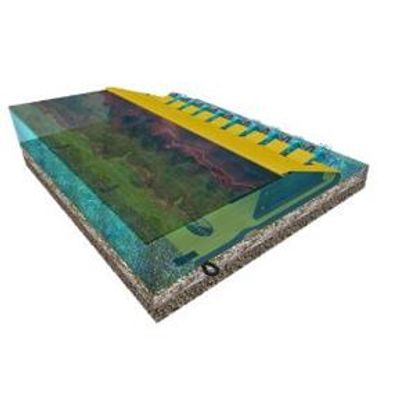
Model WT Series -Water Gate Barrier
The WT barrier has release holes to allow pollution to be controlled in watercourses, whilst allowing fresh water to flow. It can be used in conjunction with oil sorbents to control spills. The barrier features openings at its base that can be operated to let clean water flow through. The pollutant is collected at the surface where it builds up long enough to be treated. The release holes can be opened or closed during use.
Use with Spillboa
Help avoid heavy fines
The Water-Gate can be used in conjunction with a Spillboa sorbent boom to contain pollution. Whilst the Spillboa is mostly used with the WT barrier, it is also compatible with the WA and WL Water-Gates. The Spillboa is a compact flexible boom which can be deployed in seconds. The Spilboa can be clipped to the top of the barrier to control oil spills. Oil floats to the top of the water, and the Spillboa floats high to hold back and absorb oil.
With the WT Water-Gate, if the pollutant is less dense than water, and floats on the surface, clean water can continue to flow by adjusting the underflow outlets on the Water- Gate. The outlets can be opened and closed to control the flow whilst the system is in use. It is recommended to monitor the barrier so the outlet holes can be adjusted as required. The Spillboa can be purchased from us in the UK and can also be used individually.
- Controlling pollution spills in watercourses
- Little site preparation required
- No permanent fixings
- Slow down streams to enable pollution clean up
- Release holes allow the watercourse to keep flowing
- Release holes can be opened/closed to control flow
- Can be used in conjunction with sorbents
- Reusable
- Cofferdam designed without ballast: the flexible leading edge fits perfectly over uneven surfaces
- Only for installation in standing water
- Deep ground sheet that facilitates pedestrian passage and safe pumping for chutes
- Limits the risk of erosion in the event of overflow, especially on sandy beds