
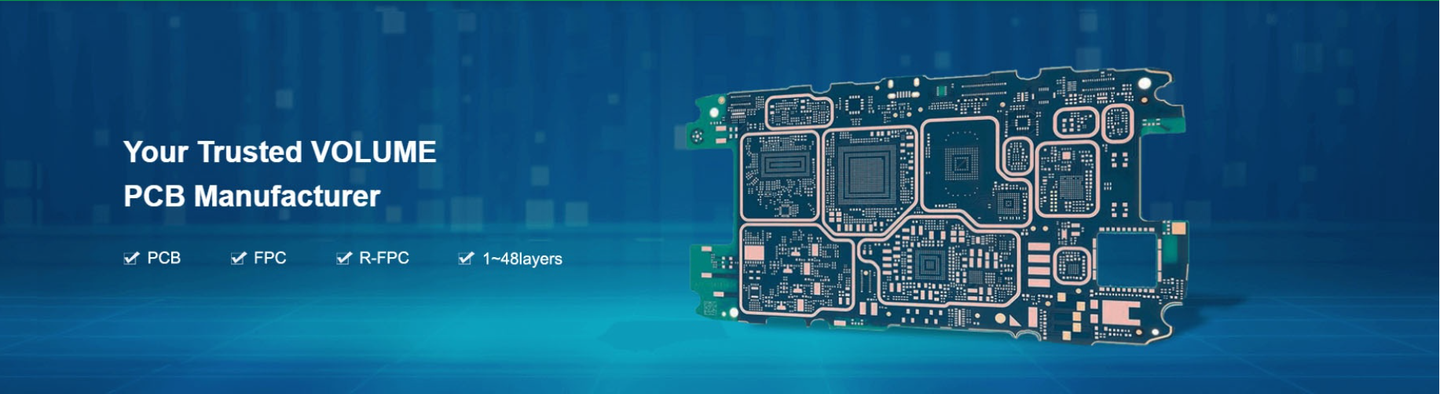

Multilayer PCBS
Multilayer PCBs are boards with more than 2 layers, including 4, 6, 8, 12… …36 layers. UETPCB’s advanced multilayer pcb manufacturing machines can accept up to 60 layers of production. Polymide, Rogers, metal cores, and many other pressing materials are available for you to choose from. You can send us your files or multilayer pcb design ideas, and we will get back to you as soon as possible with a quote.
UETPCB is a professional pcb supplier. We have many years of experience in multilayer pcb manufacturing, perfecting a smooth multilayer pcb manufacturing process from parts procurement to testing, always in compliance with IPC level 3, RoHS, and ISO9001:2008 standards.
If you want to learn more about how we can help you individually, please contact us directly with your questions.
- One-stop service: one-stop processing from PCB prototyping to SMT placement
- Speedy: fast quotation and quick response
- Fast delivery: over 98% on-time delivery rate
- High flexibility: various parameters can be customized
- Good service: professional customer service, give the best solution
- Quality assurance: 100% AOI & E-Testing, CoC provided.
- Big offer: PCBA prototyping minimum $50, PCB minimum $5
1. Multilayer pcb design
Multilayer pcb design is completed first according to the customer’s needs. PCB design includes the materials used in the multilayer pcb manufacturing process, pcb thickness, etc. We generally use a laser to image the panel directly.
2. Optical inspection
The optical system checks the quality problems of each pcb layer by comparing the actual image on the panel with the PCB design data. Can detect Faults in any layer in time.
3. OXIDE
Oxidation treatment of the inner layers of a multilayer PCB before lamination. It prevents separation between multilayer boards by increasing the roughness of the copper cladding.
4. Lamination
A hydraulic press is used to press the conductive core and glass fiber board together under high pressure and temperature. The lamination time is related to a variety of factors, which we have to consider depending on the material, thickness, etc.
5. Drilling
We need to drill holes in the pcb to facilitate the connection of components and the layers of the board. We are Using advanced multilayer pcb manufacturing machines, will submit the drilling data, and the drillers will find the exact size and location of the holes. The engine automatically detects the tool diameter and the hole slot after drilling. The machine can automatically detect the hole diameter and the hole slot after drilling, which can prevent the hole slot from being skewed or missed and ensure the accuracy of drilling.
6. Immersion of copper plating
In fully automatic copper plating equipment, hole copper and surface copper thickness are much higher than the industry standard.
7. Stripping and etching
After the plating on the panel is completed, we need to remove the residual resist and copper by the SES process. As well as ensuring that the circuit board meets the standard accuracy and quality.
8. Surface treatment
Different surface treatments are chosen according to other materials. The common one is HASL.
9. Electrical testing
After completing the multilayer pcb fabrication, the board is tested electrically with a tester.