

- Home
- Companies
- Nucor Skyline Steel , LLC
- Products
- Nucor Skyline - Rolled & Welded Pipe
Nucor Skyline - Rolled & Welded Pipe
Nucor Skyline has vast experience in manufacturing pipe piling products for the North American steel foundation industry. With our strategically located manufacturing plants, we can service the needs of any public or private project throughout the region.
- Rolled & Welded: Up to 204” OD; 2.25” Thickness
- Custom Lengths and Thicknesses
- Custom Fabrication Services
- In-house and Third-Party Testing Capabilities
- Made in the USA
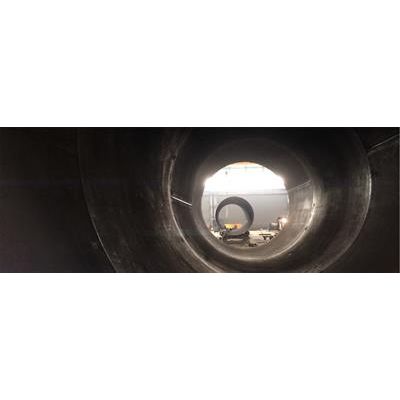
Rolled and welded pipe is made from sections of plate rolled into cans. The seam of the can is welded and then the individual cans are welded together to make the finished pipe. Rolled and welded pipe can be made in diameters of up to 16 feet and over 2.0 inches in thickness.
Manufacturing Process
Rolled & welded pipe is one of the oldest processes of manufacturing steel pipe. This manufacturing process is utilized when the pipe wall thickness exceeds the capabilities of the ERW and spiralweld manufacturing processes.
PLATE
The raw material – pieces of flat steel plate – is received into our manufacturing plant.
CUTTING
A single flat sheet of steel plate is cut on a burning table using plasma or cutting gases. This plate is cut according to the required width and length for each individual can that will form the final product.
BEVELING
After the plate is cut, it is transferred to the beveling station where the plate edges are beveled and prepped for welding.
BENDING
After beveling, the plate is transferred to the bending rolls. Nucor Skyline uses a 4-roll system to produce a true cylinder, also referred to as a can.
WELDING
The can is then staged for longitudinal welding (Long Seam). During this process, the seam between the two plates is welded on both the inside and outside.
CIRCUMFERENTIAL WELDING
During this last step of the manufacturing process, cans are fit together using the submerged arc weld (SAW) process, according to customer requirements for specific lengths.
QUALITY CONTROL
Once the welding is complete, the finished pipe is visually inspected by Quality Control (QC) and, if required, Ultrasonic (UT) testing is performed to ensure the weld is defect-free.
FINISHED PIPE
The finished pipe is then removed and ready for delivery.