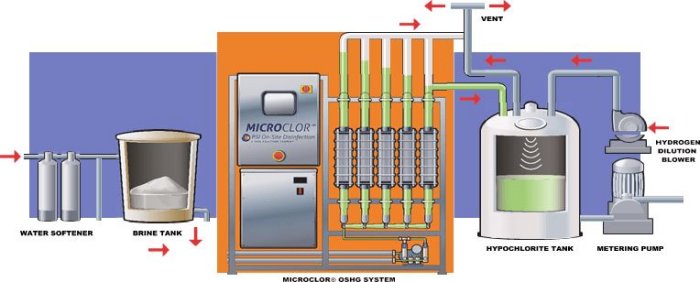


Microclor - On-Site Hypochlorite Generation (OSHG) System Over 10kg Per Day
As concerns mount and regulations change regarding the safety and security of using chlorine gas for water disinfection, many utilities are choosing sodium hypochlorite (bleach) as a safer disinfection alternative. Once the decision to convert to a safer alternative has been made the question remains whether to purchase or produce sodium hypochlorite. Microclor OSHG is the right choice to meet your disinfection requirements. The items listed below are the most significant of the many benefits realized by upgrading to Microclor OSHG. We encourage you to contact the many utilities currently using Microclor OSHG for further evidence supporting the decision to purchase a Microclor OSHG.
Safety
Microclor’s OSHG dilute (0.8%) hypochlorite solution is below the hazardous material concentration threshold of 1%. This reduces operator HazMat exposure and eliminates the need for diluting commercial hypochlorite to compensate for degradation which results in inconsistent solution strength.
Fewer Deliveries
The only raw materials required for the OSHG process are salt and water. This will reduce vendor deliveries by about 66% compared to commercial bulk hypochlorite. Less truck traffic through the community and at the facility will reduce the potential for accidents and eliminate the associated carbon footprint. This furthers efforts towards Green Facility Management and improves the water security profile.
Continuity of Operations
Microclor OSHG will enable storage of larger quantities of raw materials (salt) necessary for your disinfection process. This will result in a more sustainable and robust treatment facility better able to withstand the demands imposed by a natural disaster or health emergency.
Reduced Operational Costs
Since all chlorine compounds are derived from salt, electrolytic conversion on-site will result in significant savings to the owner. Typically, it costs 50-70% less to produce sodium hypochlorite as compared to buying it.