

- Home
- Companies
- OR-TEC, Incorporated
- Products
- OR-TEC Mark - Model II - Belt Press
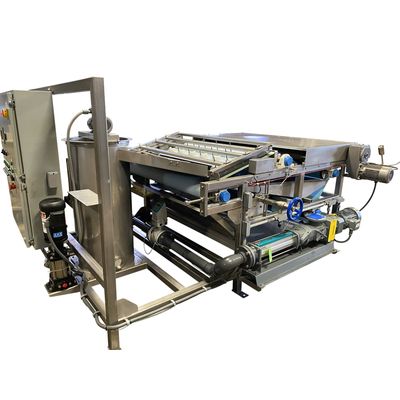
OR-TEC Mark - Model II -Belt Press
An affordable single belt press system for the small to medium WWTP. If you`re looking for an economical and simple solution to your dewatering concerns, you`ll find an answer in the OR-TEC MARK II Belt Press System. Designed with ease of operation, low maintenance, cost effectiveness and dewatering efficiency in mind, the MARK II is a proven leader in the municipal, industrial and agricultural realms. It is constructed entirely of stainless steel and can be trailer mounted for multiple site operation. It is an excellent solution for small to medium size plants where babysitting equipment is not an option and reliable, high quality equipment is a must.
The OR-TEC MARK II is a complete operational and self-contained system which includes:
- Belt Press
- Control Panel
- OR-TEC Blend Polymer Dosing Unit
- Screw Augers/Conveyor/Dry Cake Pump
- Sludge Pump
- Wash Water Pump
- Flocculation System
- Automatic Belt Tracking
- Sludge Cake Monitoring System
- Fully automated easy to use Touchscreen Controls
- Skid mounted, turnkey, factory tested complete system
- Stainless steel frame, flocculation tank, mixers, rollers, pans, trays and fasteners
- Highest quality pumps, motors and geardrives
- OR-TEC designed and manufactured Polymer Dosing system and Screw Auger ensures 100% equipment compatibility
- Onboard flow meters
- Available with SCADA ready controls
- Many other features and configurations available
All OR-TEC Belt Press Systems are designed, engineered, manufactured and assembled in the USA
Chemical Dosing
AnOR-TECBlend emulsion polymer feed system automatically makes up and delivers the polymer and water solution to the injection site. As an alternate, a solution of suitable polymer is made up in a stainless steel chemical mixing / storage tank. The tank is usually designed with a capacity for one day operation of the system.
Sludge is pumped to a stainless steel flocculation tank by a variable capacity pump. Prepared polymer is simultaneously injected to the inlet of the flocculation tank by a variable speed chemical dosing pump. Here a thorough mixing occurs that is aided by a variable speed flocculator fitted in the tank. Speed adjustments are manual.
Flocculated sludge flows from the flocculator down a sludge feed chute. This chute provides a gentle and even distribution of sludge over the gravity drainage section and a uniform thickness on the dewatering belt. The drainage area allows for the separation of the free water contained within the sludge and its consequent discharge into the drainage tray. Capillary action takes place as the dewatering belt moves across tracking and pressure rollers. The drainage area is sealed by polypropylene skirting that is bolted to the top trays and rests on the filter cloth.
Roller Pressure Dewatering Zone
Further liquid removal is achieved as the belt and sludge are pressed between a series of rubber covered rollers. Gradually the sludge is squeezed by adjustable rollers that have been preset during commissioning.
Dewatered sludge is continuously removed by a fixed scraper blade acting against the final roller and allowed to fall into a horizontal stainless steel conveyor. The conveyor can transport the sludge cake to the outside of the building. Sludge cake can also be elevated with a stainless steel inclined screw auger for discharge to a waste hauling vehicle for off-site removal. A dry cake pump can be used as an alternative to the conveyor or auger.
The filter belt is continually washed by pump generated high pressure water sprayed through fine nozzles. Belt wash water and filtrate are collected in a stainless steel drainage tray. This runoff is funneled to the customer drainage system via the supplied 4" diameter flanged outlet in the tray. In most cases, the filtrate is acceptable as reuse for wash water, as is the final effluent of the W.W.T.P.
The system can be automatically controlled. Start-up is simple and requires a minimum of time. The unit`s design, incorporating variations in both speed of the main elements and in roller pressure, offer a high degree of flexibility to the end user.