
C. F. Nielsen - Paper Briquetting Plant for 400-1000 kg/hour
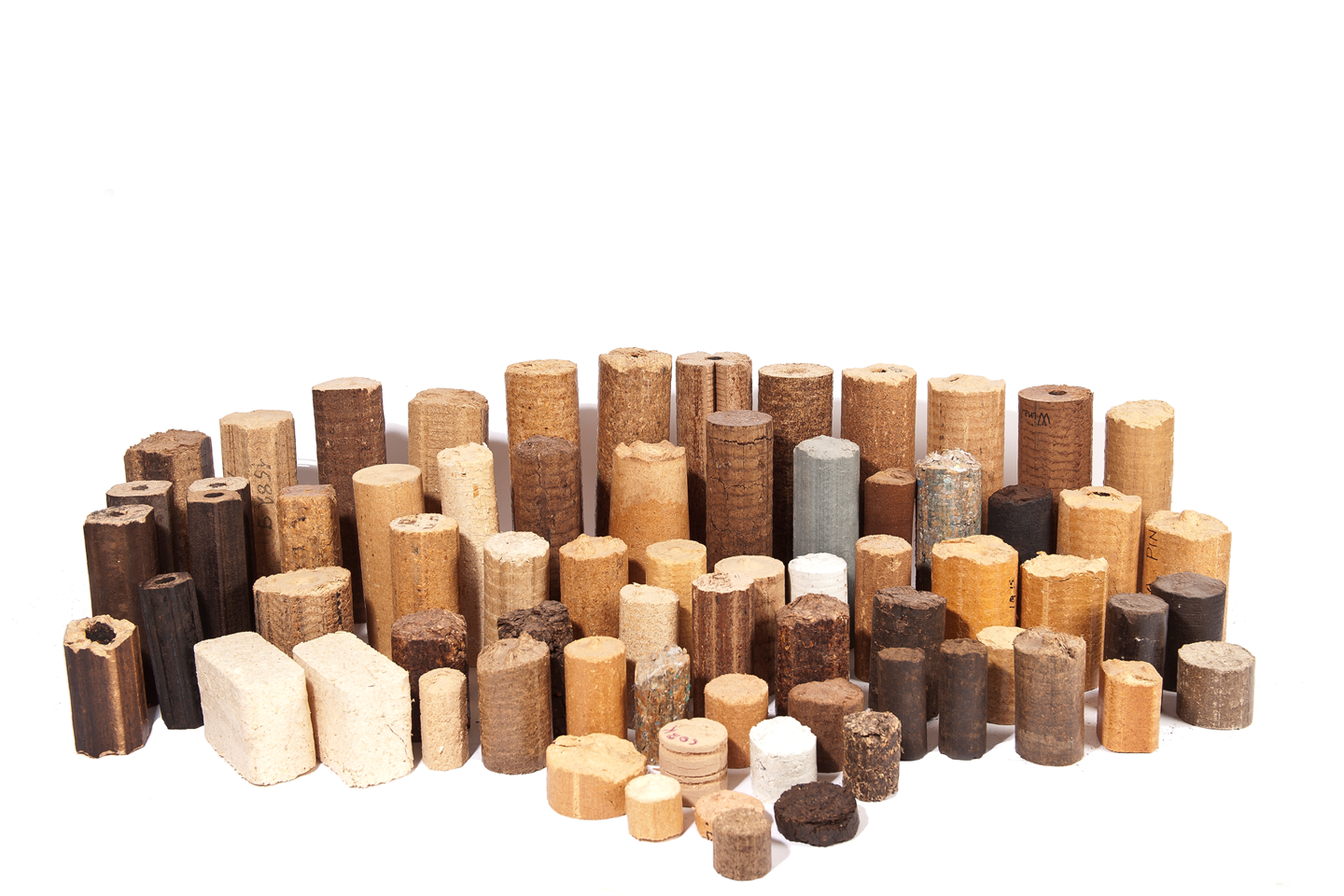
For production of Ø60 or Ø75 mm, industrial briquettes from paper waste like bank notes, print shop waste, old magazines, cardboard etc.
Requirements for raw material:
- Particle size has to be less than 20x5x3 mm,
- Moisture content of the raw material should be in the range 6 – 16%,
- Raw material must be suitable for briquetting, or tested if there is any doubt.
We are ready to perform a test briquetting based on you supplying us actual dry raw material, with correct particle size and moisture content.
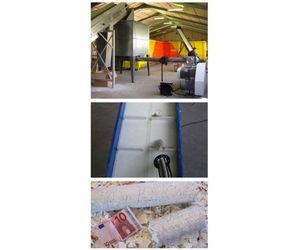
This case is based on an actual plant, Embal in France.
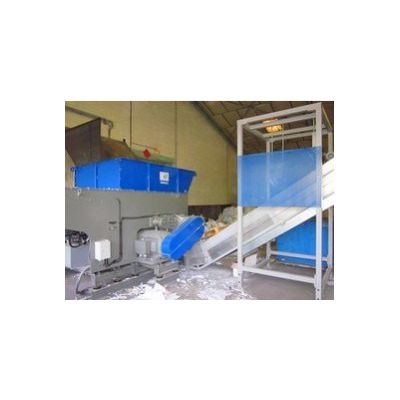
The paper waste is stored in a bunker in the corner of the plant. A wheel loader is used to fill the waste in to a hopper on top of the shredder and milling unit that reduces the paper to a suitable particle size.
A conveyor feeds the paper waste into the 6-8 m3 buffer silo with integrated dosing system for feeding the briquetting press. This press has capacity of max 600 kg/hour.
This plant has a BP 3200 briquetting press with BBCS control system
The nominal capacity for BP 3200 is 400-600 kg/hour, but for this plant it will be 15-25% lower, depending on the actual paper waste.
Installing a BP 4000 press will increase the capacity to around 500-600 kg/hour and a BP 5000 will go as high as 800-1000 kg/hour depending on the actual raw material and the requirements for the briquettes.
An equivalent Briquetting Press UNIT might also be used for this solution.
Briquetting Control System
All vital functions of the press are controlled by the operator friendly BBCS Control System, that includes a Siemens PLC. A frequency controlled dosing screw feeds an exact amount of raw material into the press at a steady flow.
Level switches in the silo signals to the conveyor, when refilling of the silo is required. The BBCS control system is capable of keeping a constant max load on the press, even with fluctuating density of the raw material.
Transportation and storage of the briquettes
The briquettes are produced in a continuous string and conveyed to the storage facility via a short, straight cooling line, as the paper briquettes will often be unable to take the load without blocking the cooling line. Curved cooling lines is not recommended for this application. Outdoor cooling lines have to be covered.
At this project a 5 m long cooling line delivers the briquettes to a conveyor that loads them in the container. Normally the briquettes are allowed to just dropping down in the warehouse or container at the end of the cooling line.
Filling of container or warehouse.
A U-shaped guide system is normally installed under the roof of the building or over the container will automatically make sure the warehouse or container is filled from one end to the other.
Utilization of industrial briquettes:
Industrial briquettes is carbon neutral no fossil fuel, which is suitable for burning in small and medium size boilers at district heating plants, power plants etc.
Lay-out details
For a solution like this we normally recommend a standard briquette press with a dosing silo as shown on the photos and the lay-out proposal found in the files box hereunder.