


- Home
- Companies
- Aqseptence Group GmbH
- Products
- Johnson Screens - Passive Intake ...
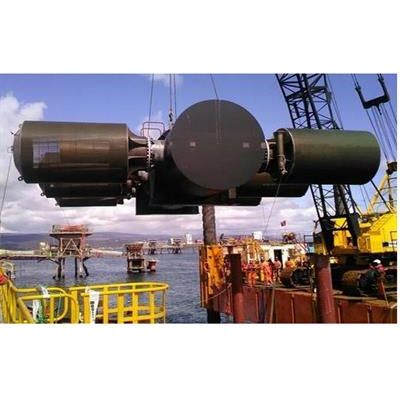
Johnson Screens - Passive Intake Screens
Johnson Screens have been developing passive screens since 1968. In the meantime, more than 4,000 passive intakes have been installed worldwide. This type of screen is particularly interesting for flow rates of up to 100,000 m³/day or more, depending on costs for submerged constructions.
Unique Selling Point
- Johnson Screens® developed the first Passive Intake Screens in 1968
- More than 4,000 passive intakes have been installed worldwide
- Particularly interesting for flow-rates up to 100,000 m3/day or more depending on costs for submerged constructions
- Most even through-slot velocities and lowest entrainment risk
- High flow capacity and adaption to your project
- Easy to install
- Low pressure loss
Johnson Screens high capacity passive intake screens are constructed using non-plugging Vee-Wire® with a patented internal flow modifier that creates a nearly uniform low velocity flow through the entire screen surface. This reduces impingement and entrainment of debris while protecting aquatic life. Passive intake screen systems have no moving parts that could break down or wear out, unlike travelling screens. This eliminates the need for replacement parts and costly repairs.
The controlled slot velocity of the screen, coupled with the specially matched Hydroburst™ air backwash system, keeps the system clean and operating. This combination (passive screens and the Hydroburst™) is commonly known as JOIS™ (Johnson Offshore Intake Systems)
The Hydroburst™ system is designed to deliver a certain/adequate volume of air in 3 – 5 seconds time – a solid blast of air that has proven to work in all types of applications and conditions. This volume of air comes out from the bottom of the screen, and as it rises and expands, grabs and carries away impinged debris from the screen surface, returning the screen to a clean operating condition. Our application engineers evaluate screen size, depth and distance away to deliver the correct amount of air. Systems can be as basic as operating a manual valve, a programmable timer system or to a PLC system that communicates to a central data control system/SCADA system for control.