


- Home
- Companies
- Solidification Products International, ...
- Products
- SPI - Petro Barriers
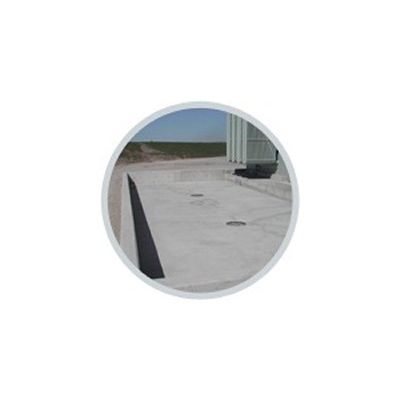
SPI - Petro Barriers
Designed for the largest volume of water drainage in a good drainage field with a vertical type installation, Petro-Barriers™ are custom-designed and manufactured in our factory and delivered to your facility/facilities. Land slope, under-drain percolation rates, rainfall amount, containment area size and other factors are all considered in the system design. Large containment areas or installations in wet climates might require six or more sumps whereas a small area in a low-rainfall climate might need only one or two Petro-Barriers™. Because of this variability, our customers rely on our extensive experience to design the optimum spill containment system.
In a spill containment area surrounding an oil storage vessel or oil-filled electrical transformer, everything on the ground is designed and created to be impervious to oil and water. The ground is sloped to drainage sumps where the Petro-Barriers™ will be installed. After the drainage path and spill containment area have been completed, SPI fills the drainage sumps with three types of media that allow water to pass while removing and locking up any oil.
Average stormwater drain rates per barrier vary from 18 gallons per minute (gpm) with the 12-inch diameter Petro-Barrier™ to more than 100 gpm with the 72-inch diameter Petro-Barrier™. Petro-Barriers™ are typically 24 inches deep, though custom applications are available. The most popular diameters are 18”, 24” and 36”.
Expensive, high-maintenance methods such as oil/water separators, oil stop valves and oil sensing switches for pumps have contributed to or failed to prevent significant and costly oil spills for many of our customers. In comparison, with thousands of installations, oil has never gotten past the Petro-Barrier.
Petro-Barriers cost less to install, require virtually no maintenance under most circumstances, and offer the most foolproof way to prevent oil from being discharged along with storm water.
In normal non-spill operation, a Petro-Barrier has a five-year useful life. In the event of an oil spill, the barrier material forms a plug to prevent oil from escaping into the discharge and hence into the environment. Following a spill, the oil is contained within your spill containment area and can be reclaimed with pumps and filters. The plugged material is removed and replaced, refreshing the barrier.
A moat containment area surrounds a new substation transformer; Petro-Barriers drain rainwater and provide 100% oil containment.
The oil containment area is cleaned and the Petro-Barrier is installed for 100% rainwater discharge and oil containment.
Petro-Barriers installed at a hydroelectric dam drain directly into the river below from the deck with oil-filled equipment.
Petro-Barrier housings are cleaned and ready for installation.
The Petro-Barrier is lowered into the opening and the Petro-Barrier flange is sealed to the concrete. The Petro-Barrier can be lifted out and replaced after removing the housing screws.
Now in place, the Petro-Barriers provide 24/7 water drainage and 100% oil containment.
Pre-filter canisters attached to the Petro-Barriers prevent dirt and debris from clogging the Petro-Barriers. The tops are hinged, allowing easy maintenance.
SPI removes Oil Stop Valves at several locations in the Philadelphia area for PECO. The valves were non functioning and never maintained. These were installed over ten years ago and SPI technology was used to replace the non working valves. SPI cut out and removed the valves making way for the installation of the Petro-Barrier.
The Oil Stop Valve is sitting inside the concrete sump and the heater rests on the fiberglass grate. This was installed to keep the stop valve from freezing in cold weather.
The heater has had the electricity disconnected and is removed and disposed of.
The Oil Stop valve is removed by cutting away at the connections. This technology uses a float system that detects if oil is present if the specific gravity changes with oil the float moves and shuts off the system. The valve is removed. Maintenance was required on a regular basis to keep the valve in proper operation but was not performed causing the valve to no longer work.
The existing drain vaults are then modified with angle iron supports and fiberglass grating as the support for the Petro-Barrier. Each Petro-Barrier is installed on-site with different medias for sheen removal and total oil spill containment. The Petro-Barriers are compressed into a filter cake (solid mass) and then they are topped with dirt and debris filters to keep the dirt out of the SPI media.
The Petro-Barriers have been installed for three years at which point PECO contracted SPI to perform a maintenance check and replace filters if required. There is a lot of accumulated dirt under the grate although the Petro-Barrier is still flowing without problems. Due to a lot of accumulated dirt and debris the filter matting was replaced and the Petro-Barriers are sill working protecting from oil sheen or a full scale oil spill.
Petro-Barriers have been installed in thousands of locations across North America since 1998. The original design of the Petro-Barrier in the above drawing uses a sump in the containment area that utilizes a corrugated HDPE pipe that may extend up to 48” deep. This design is for discharge of water directly into the ground. The bottom 20” is filled with crushed stone and can be perforated to allow the water to discharge through sides as well as the bottom. The top 30” is non perforated and the rainwater is filtered through the Petro-Barrier media, filtering any oil sheen to non-detectable levels. The top 4” are dirt and filtration filters that are replaceable for maintenance of the Petro-Barrier. The Petro-Barriers are topped off with clean crushed stone and are available with steel grates and/or filter top hat baskets.