


PID Analyzers, LLC
- Home
- Companies
- PID Analyzers, LLC
- Products
- PID Analyzers - Model 322 - Compact Lab ...
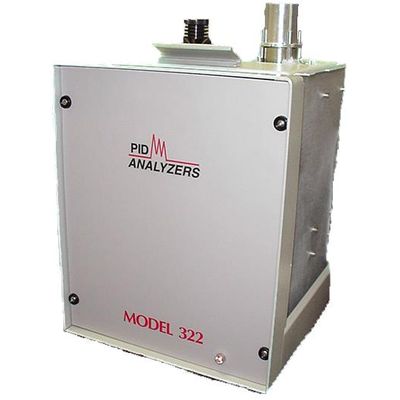
PID Analyzers - Model 322 -Compact Lab Gas Chromatograph (GC) System
The Model 322 provides analytical capabilities unmatched by any other compact GC. The Model 322 dual-detector capability combined with its isothermal or temperature programmed oven, choice of injectors, and the ability to accommodate packed or capillary columns provides exceptional stability and flexibility for a wide range of environmental, laboratory, and mobile lab applications.
Most popular related searches
catalytic combustion detector
thermal conductivity detector
laboratory gas chromatography
flame ionization detector
flame detection system
gas valve
combustion detector
photometric detector
conductivity detector
chromatography GC
- PID Lamps: Our 9.5 and 10.6 eV lamps remain the best in the business since we developed them over 30 years ago.
- Display: NA - Requires external PC (not included).
- ADC: Our 16 bit ADCs provide a resolution of 1 part in 64,000 and our signal algorithm minimizes noise by signal averaging in the msec range; the ADC can acquire positive or negative signals- Uses USB connection to external PC.
- FID: Our very sensitive FID has flame out sensor that will shut off the hydrogen if the flame goes out.
- PC: Requires Pentium Computer (not provided) with > 1 GByte of RAM and hard drive > 40 Gbyte.
- Autoranging: The 322 has 3 ranges with computer controlled autoranging- x1, x 10, x 100.
- FPD: Our very sensitive FPD has flame out sensor that will shut off the hydrogen if the flame goes out.
- Operating system: Windows XP® (not provided).
- Autozero: Beginning of each run.
- Ease of calibration: Manual.
- Peak Detection & System Operation: Controlled by our 32 bit PeakWorks software program with more than 20 years of development.
- Programmable Voltage/current output: 0-1VDC.
- Digital outputs: USB connection.
- Oven
- Size: 7`` x 7``
- Typical column diameter: 3.5``
- Temperature range:
- Isothermal: 25-150 Degrees Celcius
- Temperature programmed: 25-200 Degrees Celcius.
- Detectors: Photoionization detector (PID), Flame ionization detector (FID), Thermal conductivity detector (TCD), Flame photometric detector (FPD), Far UV absorbance (FUV) detector, Catalytic combustion detector (CCD)
- Linear Dynamic Range: PID - 108 FID - 2 x 10⁶ TCD - 2 x 10⁴ FPD- S - 103; P 105 Far UV - 106 CCD - 5 x 10⁴
- Sample Flow Rate: > 0.5 LPM
- Power consumption: 60 Watts; 90-220 V
- Species measured:
- PID & FID: Organics (VOCs by PID or FID) and inorganic species (H2S, NH3, AsH3… ) that can be ionized by the PID lamp (9.5, 10.6 or 11.7 eV)
- TCD: Universal detector- fixed gases (O2, N2, CO…), organic and inorganic compounds, very sensitive for H2, He, Xe
- FPD: Selective response for S or P compounds
- Far UV: Nearly universal response for organic and inorganic compounds
- CCD: Combustible compounds such as hydrocarbons
- Sensor(s): 1 or 2 detectors
- Injection: On-column syringe injection or automatic with 6 port gas valve (optional)
- Dimensions: Enclosure - 9.5`` W x 11.5``H x 16 ``D
- Precision: +/- 1-2% of reading
- Span Drift: <1% over 24 hours
- Weight: Steel case - 17.5 pounds
- Detection Limit:
- PID - 0.5 ppb benzene
- FID - 50 ppb benzene
- TCD - H2 - 10 ppm; O2 150 ppm
- Response time: Depends on retention times
- Zero Drift: NA- autozero on each run
- Instrument operating conditions: 5-40 degrees C, 0-95% RH (non-condensing)