

- Home
- Companies
- Nucor Skyline Steel , LLC
- Products
- Skyline - Model ERW - Pipe
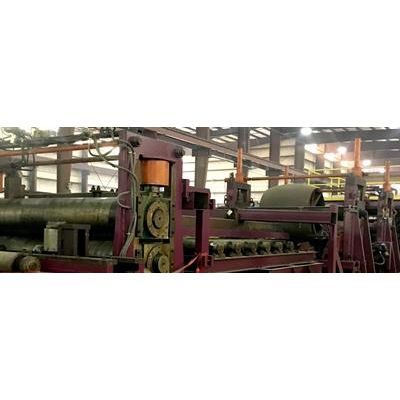
Skyline - Model ERW -Pipe
Nucor Skyline has vast experience in manufacturing pipe piling products for the North American steel foundation industry. With our strategically located manufacturing plants, we can service the needs of any public or private project throughout the region.
- ERW Straight Seam: From 2-3/8” to 24” OD; Up to 0.625” Thickness
- Custom Lengths and Thicknesses
- Custom Fabrication Services
- Spiralweld Pipe Accepted by DOTs in Seismically Active Areas
- In-house and Third-Party Testing Capabilities
- Made in the USA
Electric resistance welded (ERW) pipe is made from steel coil and the weld seam runs parallel to the pipe. The width of the coil is the same as the circumference of the pipe so diameters are limited to 24 inches. However, the manufacturing process is fast so it is ideal for large production runs of small (
Manufacturing Process
Electric Resistance Welded (ERW) pipe is manufactured by cold forming a flat steel strip into a rounded tube by passing it through a series of forming rollers to obtain a longitudinal seam. The two edges are then simultaneously heated with a high frequency current and squeezed together to produce a bond. The longitudinal ERW seam does not require filler metal while impurities in the heat affected zone are extruded during the welding process.
UNCOILING & FLATTENING
Incoming coils are peeled and unwrapped for presentation into the flattener rolls. Flattening removes the coil set to produce a flat steel strip.
COIL JOINING
Coil ends are joined together with a butt weld to produce a continuous strip
EDGE TRIMMING
Slitter blades and edge milling trims strip edges to provide the precise strip width required during the forming and ERW seam welding process.
FORMING
The forming process begins at the Breakdown Pass where the material is gradually bent from a flat steel strip into a rounded tube for presentation to the ERW seam welder.
WELDING
A high frequency electrical current flows through contact tips into the strip edges to produce the heat required for bonding the strip edges together as the material passes through the weld roll stand.
QUALITY CONTROL
Once the welding is complete, the finished pipe is visually inspected by Quality Control (QC) and, if required, Ultrasonic (UT) testing is performed to ensure the weld is defect-free.
PIPE SIZING/STRAIGHTENING
The Sizing Section squeezes the welded pipe into the precise roundness, outer diameter, and straightness tolerances specified by the customer.
PIPE CUTTING
The flying cut-off saw attaches to the pipe as it is being produced and cuts the pipe to the length specified by the customer.