
- Home
- Companies
- Pollution Systems Inc.
- Products
- Pollution Systems - Direct-Fired ...
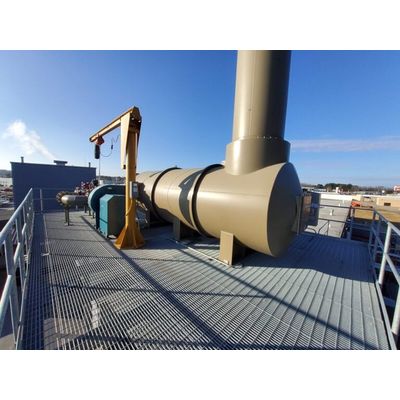
Pollution Systems - Direct-Fired Thermal Oxidizers for VOC and HAP Control
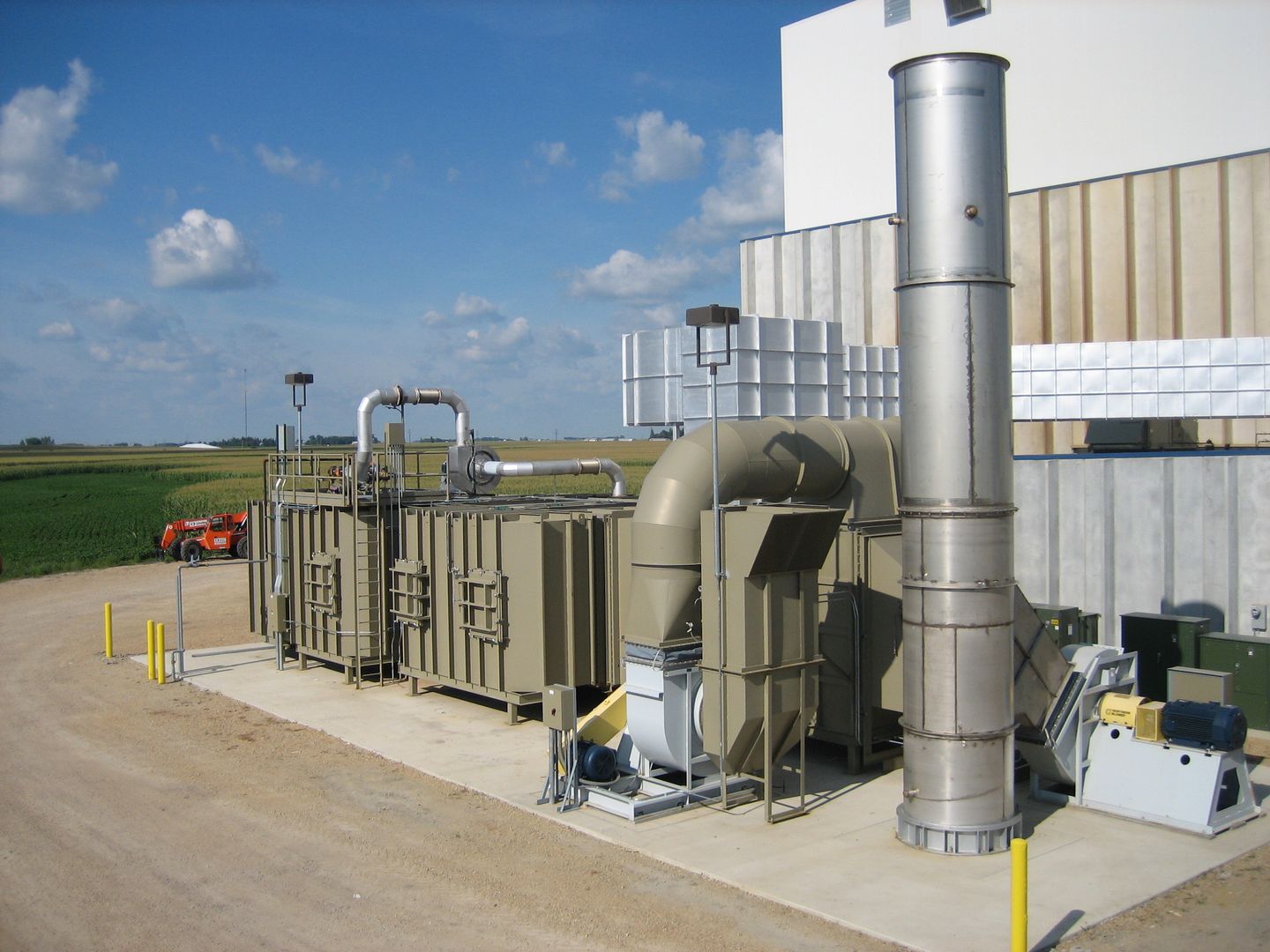
Direct-fired thermal oxidizers, also known as afterburners or incinerators, serve as reliable air pollution control systems capable of adapting to fluctuations in waste stream flows and pollutant compositions. They function by mixing industrial waste exhaust with air inside an oxidation chamber, where the waste is heated by a burner to achieve the necessary temperature and time for pollutant destruction. With a high destruction rate efficiency of over 99% for appropriate applications, these systems leverage low thermal efficiencies and simple operations to accommodate batch or continuous processes, often without the need for primary heat exchangers. Commonly deployed in industrial processes with significant energy content from combustion heat, these oxidizers are designed to efficiently manage emissions and cater to specialized applications like siloxane abatement.Direct-fired thermal oxidizers (a.k.a. afterburners or incinerators) are highly reliable air pollution control systems that operate over a large process window and can safely handle incoming fluctuations in waste stream flow rates and compositions of pollutants. These systems run simply with little downtime and are flexible for batch or continuous-type applications. Few moving parts and constant stable operating pressures and temperatures can achieve >99% destruction rate efficiency for the proper application.
Industrial waste exhaust is combined with air inside the oxidation chamber and then heated with a burner at the appropriate temperature and duration needed for pollutant destruction. Most gases are combustible and have lower explosion limits (LEL), where they burn in the presence of air, oxygen, and an ignition source. To determine the operating temperature, duration, and air quantity mix, present VOCs and HAPs are identified along with their LEL values. Direct-fired oxidizers are required to operate at no more than 50% above the lowest LEL (per NFPA) in the waste stream composition.
Once the pollutants have fully oxidized, the cleaned exhaust is pulled via induced draft through the stack and released.
- VOC, HAP, and PM DRE of 99+%
- Can handle flow rates ranging from 100-50,000 scfm
- Low maintenance due to few internal moving parts
- Features such as clean-out doors facilitate cleaning when needed
All PSI Direct-Fired Thermal Oxidizers come with advanced system features.
DFTOs have low thermal efficiencies and are ideal for treating processes that contain high energy due to the heat of combustion of components in the process gases. Often, they are effective in applications where primary heat exchangers are not necessary due to high solvent loading.
Industries where direct-fired thermal oxidizers can be an appropriate air control solution:
- Transportation Electrification
- Biofuels
- Recovery & Recycling
- Petrochemical Processing
- Building Materials
- Midstream
Although commonly used in straightforward process applications, Pollution Systems can design our Direct-Fired Thermal Oxidizer to abate special applications such as siloxane.
Love visuals? Our 3D model below showcases a Pollution Systems Direct-Fired Thermal Oxidizer followed by a Quench and Venturi Scrubber. Simply hover your cursor within the frame and use the mouse to rotate and zoom the model.