


Wildlife Computers
  1. Companies
  2. Wildlife Computers
  3. Products
  4. Wildlife Computers - Model MiniPAT 390 ...

Wildlife ComputersModel MiniPAT 390 -Pop-Up Archival Transmitting Tag

SHARE
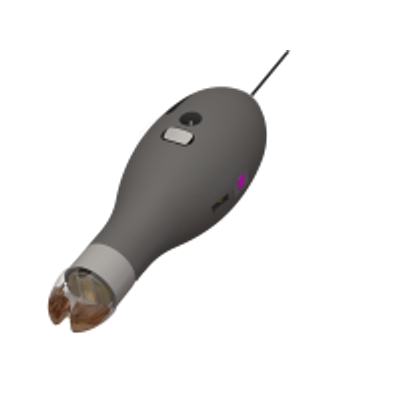
The MiniPAT is a pop-up archival transmitting tag (PAT tag) designed for tracking large-scale movements and behaviors of fish and other marine animals that do not frequent the surface enough to utilize real-time satellite tags. Integrating archival and Argos satellite technology, it records depth, temperature, and light-level data, which are summarized for transmission and archived onboard. At a researcher-preset date, the tag detaches from the host, surfaces, and uploads a data summary to Argos satellites. With an emphasis on reliability and ruggedness, the MiniPAT features a stable low-drag shape, a resilient nosecone, and a robust integrated pin for enhanced retention. Its design improvements ensure the nosecone remains attached during the deployment, increasing the chances of long-term data collection. The tag also includes a pinger for recovery via radio tracking.
Most popular related searches

The MiniPAT is a pop-up archival transmitting tag (PAT tag, also known as a PSAT). It is a sophisticated combination of archival and Argos satellite technology. PAT tags are designed to track the large-scale movements and behavior of fish and other animals which do not spend enough time at the surface to allow the use of real-time Argos satellite tags.

Depth, temperature, and light-level data, among others, are collected and summarized for transmission and archived in onboard memory. Then on a preset date set by the researcher, the tag releases from its host animal, surfaces, and uploads a summary of the archived data to Argos satellites.

Developed with a focus on reliability, ruggedness, and ease of use, the MiniPAT features a stable low-drag shape, a strong integrated nosecone and pin, and a pinger for radio tracking recovery.

Our latest design offers the benefit of a more resilient nosecone and pin. The nosecone will no longer separate from the tag and will not stay with the tether after the pin burns to pop up. This design allows for much stronger retention and thereby increasing the probability of longer deployments.

 
  • A complete record of depth, temperature, and light-level readings are stored. Should the MiniPAT be recovered, the full archive is available for download.
  • Flexible programming allows researchers to customize and prioritize data transmissions and release parameters.
  • A corrodible pin allows the release of the MiniPAT from the fish on a pre-programmed date or when certain conditions indicating the tag is no longer on the fish (conditional release) are met.
  • Once released, the tag floats to the surface so data can be transmitted.
  • Depth Archive (Pressure)
  • Temperature Archive
  • Light Archive
  • Acceleration Z-Axis Archive
  • Acceleration 3-Axis Archive
  • Upright and Knockdowns (Orientation) Archive
  • Activity (ATS) Archive
  • Dry Archive
  • Light-Level Geolocation (GPE3)
  • Argos Locations
  • Daily Data—Depth, Temperature, and Light
  • Orientation
  • Activity Time Series (ATS)
  • Depth Time Series
  • Temperature Time Series
  • Mixed Layer
  • PDT
  • Time-At-Temperature Histogram (TAT)
  • Time-At-Depth Histogram (TAD)
 

Attachment Type: Towed
Sensors: Wet/Dry, Depth, Temperature, Light, Accelerometer
Depth Sensor Range: 0-1700 m
Depth Sensor Resolution: 0.5 m
Depth Sensor Accuracy: ±1% of reading
Temperature Sensor Range: -40° C to 60° C
Temperature sensor Resolution: 0.05° C
Temperature Sensor Accuracy: ±0.1° C
Conductivity Operational Limits: 0.1 to 5 S/m
Light Sensor: 5 x 10-12W.cm-2 to 5 x 10⁻²W.cm-2
Operating Temperature Rating (°C): -20° C to 50° C
Optimal Storage Temperature Range (°C): 0° C to 5° C
Memory: 64 MB
Dimensions: 118 mm (length) x 38 mm (diameter)
Weight in Air: 61 g
Pressure Rating: 2000 m
Maximum Deployment Length: 730 days