


- Home
- Companies
- Rees-Memphis, Inc.
- Products
- Rees-Memphis - Scrap Handling Systems
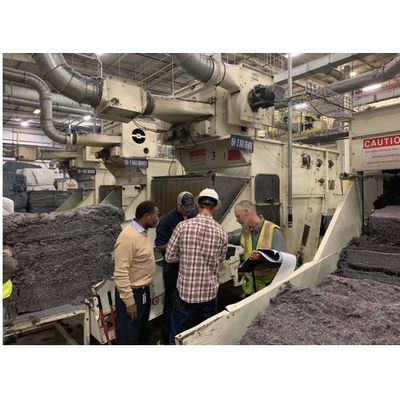
Rees-Memphis - Scrap Handling Systems
REES provides all components for scrap handling systems paying particular attention to the customer’s material characteristics. We help companies find solutions to scrap problems involving paper, plastics, textiles, recycled materials, and rubber. Scrap and recycled products are pneumatically conveyed away from work areas and processing equipment using scrap handling fans. Cyclones are used to separate the scrap material and filters can be added if needed. Systems can be integrated with production equipment, conveyors, grinders, balers, shredders, trim cutters, and floor sweeps.
Components of Scrap Handling Equipment
Cyclone Separators
REES manufactures paper handling cyclones that are specifically designed to separate light paper dust and scrap by using multiple inlet connections from the production line, a larger waste outlet to efficiently feed balers, and a perforated inner cone to enhance the separation process.
Trim Cutters
Trim Cutters are used to remove the edge trim from production lines by cutting continuous scrap material into smaller pieces. This enables the air conveying systems to operate more efficiently by eliminating blockages in the duct and preventing scrap from wrapping around the fan wheel.
Shredders
Shredding is an effective way to handle scrap from all types of paper products and other bulky materials. Through waste reduction methods using Shredders, manufacturers can decrease handling time and increase scrap bale density, resulting in overall cost saving efficiency.
Floorsweeps
Floorsweeps provide a simple method for sweeping material into the scrap handling system from the plant floor. By using a Shredder at the floorsweep, scrap size is immediately reduced and material handling labor is minimized.
Balers
Using a Baler is the most cost efficient way to reduce the volume of scrap waste and prepare it for recycling. REES provides balers to handle a variety of scrap materials while ensuring that bale production and bale density are optimized, providing a lower total cost per bale and an increase in return on investment.