


Vector Magnetics

Vector MagneticsRotating Magnet Ranging System (RMRS) for Improved Drilling Accuracy

SHARE
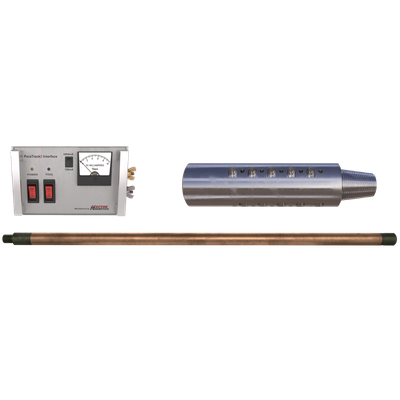
The Rotating Magnet Ranging System (RMRS) is an active magnetic ranging tool that offers independent proximity measurements which are free from the common inaccuracies seen in standard magnetic and gyro surveying methods. The system includes a compact magnetic sub positioned directly behind the drill bit that produces an AC magnetic waveform when the rig pumps are active and mud is flowing. This magnetic signal, detectable by sensors in adjacent wells or HDD pilot bores at distances over 300 feet, allows for early verification of target location, giving drillers ample time to adjust the trajectory. This technology makes it feasible to intersect casing as small as 4 inches in diameter without requiring expensive passby or sidetrack operations, thus saving rig time and minimizing project costs. RMRS is utilized across a variety of applications including salt, potash, and trona solution mining, coal bed methane extraction, and horizontal directional drilling (HDD) intersections. In solution mining, RMRS enables the connection of multiple caverns via a single horizontal production well, thus enhancing the economic viability of deposits. For coal bed methane, RMRS aids in efficient long wall mining by enabling precise connections and improved dewatering. In HDD, it allows for complex crossings under significant geographical obstacles.
Most popular related searches

The Rotating Magnet Ranging System (RMRS) is a stand-alone active magnetic ranging tool providing independent proximity measurements free from the inaccuracies inherent in standard magnetic and gyro surveying methods.

A compact magnetic sub located directly behind the drill bit generates an AC magnetic wave form when rig pumps are activated and mud is flowing. This signal is detected by sensors in an adjacent well or HDD pilot bore, at a range of >300 ft. By verifying target location early, the driller is given adequate time to make even significant changes in trajectory. Thus, the intersection of casing as small as 4 inches in diameter is possible, without the need for a costly passby and sidetrack, saving rig time and controlling project costs.