


- Home
- Companies
- Comex Polska Sp. z o.o.
- Products
- Comex - Model MSX - Scanning System for ...
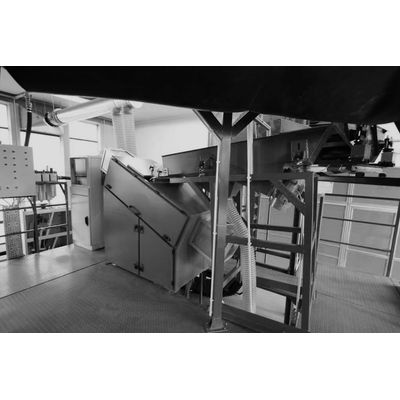
Comex - Model MSX -Scanning System for Extensive Testing
Our multi-channel Comex MSX scanning system provides you with a wide range of testing. Thanks to this, you can precisely and easily characterize and separate different materials. The main function of our scanning system is to characterize the analyzed particles in terms of properties such as color, size, shape, texture, density, etc.
You can easily use the scan results you receive for:
- Identification of differences between particles
- Define measurement methods
- Identify the types of sensors to identify these particles
The Comex MSX scanning system has been developed to provide you with the most accurate information about the materials being scanned. The scanning process starts with the manual feeding of particles into the inlet section. They are placed there on a slow-moving conveyor belt. They are sent one at a time, both during scanning and during sorting. The particles are then transported on a conveyor belt and analyzed using sensors such as:
- Magnetic sensor consisting of a series of inductive sensors measuring the magnetic properties of the analyzed material, thus creating a “magnetic” image of the analyzed particles
- UV light source and camera analyzing the absorption coefficient of the material in the range of light wavelengths less than 400 nm
- Infrared light source and camera analyzing the absorption coefficient of the material in the range of light wavelengths above 700 nm. You can use different infrared ranges, such as NIR, SWIR, MWIR, LWIR
- A visible light source and a camera analyzing the absorption coefficient of the material in the wavelength range of 400-700 nm. Using separate filters, you can use individual bands of light (except standard RGB bands)
- X-ray source and detector array analyzing a beam passing through a test material. This allows the identification of the X-ray attenuation coefficient of the tested material and its internal structure
- 3D camera identifying the geometry of the analyzed particles. Thanks to it, you gain additional information about the analyzed material in combination with other measurement techniques
At the end of the conveyor belt, a simple rejecting blade is installed. When the system is in sorting mode, the paddle directs the identified particles into two separate bins equipped with scales. In sorting mode, both fractions are weighed online, and in scanning mode, each individual particle is weighed.
Our sorting solutions are particularly desired by companies operating in the processing, mining and construction industries. Separation systems will prove themselves in industrial processes, especially in the mining industry.
They can be used to sort metal ore or coal. Our innovative grinding systems have been used by companies from the metallurgical, food, medical and electronics industries for years.
The scope of use of sorting products increases with our mobile sorting system, installed in standard sea containers. It is a flexible, easy to move and install anywhere logistics solution.
Regardless of where the sorting systems operate, they will ensure a reduction in separation costs, reduction of energy consumption in the plant, reduction of transport costs and a significant reduction in the amount of waste.