


- Home
- Companies
- Hein, Lehmann GmbH
- Products
- Liwell - Screening Machines
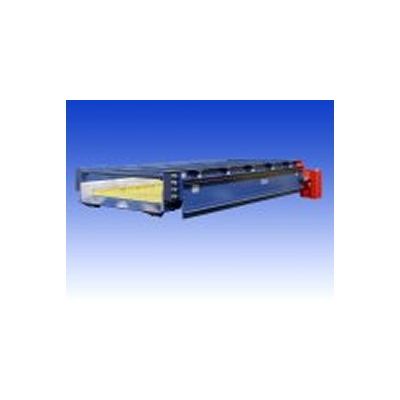
Liwell - Screening Machines
LIWELL screening machines have been in operation for decades and are the guarantor for optimal technology in classing feed materials which are difficult to screen. The special construction generates accelerations on the screen panel, unequalled up to now, of approx. 50 g - where the machine structure is subject to small forces only, of approx. 3 g. Different types and designs of the machines and screen mats provide an optimal solution for every case of application. The basic principle of the trampoline-like movement of polyurethane screen mats, from loose to tension to strongly stretched condition, is used in all types.
As a result, there is optimal reliability where the problems caused by clogging and sticking grains can almost be excluded.
In particular with classing moist materials and/or fine materials, the advantages are very noticeable compared to conventional screening machines:
- Continuous operation without additional cleaning necessity
- Uniform screening results
- Higher efficiency and capacity
The combination of the unique machine principle together with screen mats especially produced by us optimises the results continuously:
- Conical hole shapes with better resistance against plugging and thus higher capacity.
- Low-wear materials of special polyurethanes with mechanical/dynamic properties remaining constant on a long-term basis.
Different construction types allow an exact adaptation of the machine to the customer needs:
With classing of different screening materials, two problems mainly occur:
- Clogging of the screen panels through caking due to the content of moisture of the feeding material
- Sticking grains in the perforation through the grain shape
Flip-flow screening machines offer an appropriate solution to both problems. The high acceleration (up to 50 g) on the screening surface prevents or reduces screening problems through clogging and sticking grains. The kinds of application are almost unlimited in this case.
Frequent applications are:
- Screening of mineral materials, such as raw sand, crushed stone sand, ores etc.
- Sieving of coal and coke
- Separation of recycling materials, such as compost, domestic waste, slag, matured timber and glass.
The cut sizes achieved depend on the kind of application and on material properties. They start with approx. 0.5 mm and end with approx. 40 mm.