


- Home
- Companies
- Environmental Coatings LLC
- Products
- Sewer Shield - Model 150 - Sprayable ...

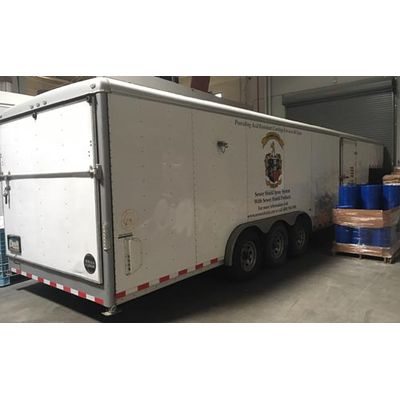
Sewer Shield - Model 150 -Sprayable Epoxy Liner System for Chemical Protection
SEWER SHIELD® 150 SPRAYABLE is an advanced 100% solids, solvent-free, and low-odor epoxy liner system that is designed to be environmentally friendly. It is highly resistant to a variety of harsh chemicals including acids, caustic solutions, oils, and grease. Particularly, it maintains excellent resistance to Sulfuric Acid up to 50% concentrations. Its low modulus characteristics provide enhanced tolerance to thermal cycles and impact resistance, making it ideal for all-weather application. This lining system is extensively utilized for protecting structures exposed to chemical attacks, such as manholes, lift stations, sewer pipes, grit chambers, clarifiers, and other wastewater and containment systems. This robust system is particularly suitable for the wastewater and chemical industries. SEWER SHIELD® 150 SPRAYABLE is available in ivory color and can be prepared and applied following specific surface preparation guidelines including abrasive blasting and hydrocleaning. The product is mixed using pre-measured kits and can be applied using automated mixing equipment for rapid installation. Coverage rates are influenced by surface texture and temperature. For cleanup, methyl ethyl ketone or xylol should be used. Stored properly, it has a shelf life of two years.SEWER SHIELD® 150 SPRAYABLE is the next generation of 100% solids, solvent free, low odor, environmentally friendly, epoxy liner system. It is impervious to a wide variety of acids, caustic solutions, oils, grease and many other chemicals. SEWER SHIELD® 150 SPRAYABLE is particularly resistant to Sulfuric Acid up to concentrations of 50%. SEWER SHIELD® 150 SPRAYABLE is a low modulus lining which provides improved tolerance to thermal cycles and impact resistance. It can also be applied in ALL WEATHER.
- MIX RATIO, by volume: 1:1
- GEL TIME, 150 grams: 15 -25 minutes
- Bond Strength (Tensile)
- Bond to damp Concrete: Concrete Failure
- Compressive Strength (neat): 2,100
- Tensile Strength (neat): 1030
- Elongation at break: 38%
- Absorption: ‹0.04%
- VOC: 0 GRAMS / LITER
- Data presented are typical laboratory values
Green concrete should be allowed to cure for a minimum of 28 days. (Consult manufacturer if earlier times are required). Remove any surface hardener or curing compounds, by using the recommended mechanical methods for surface preparation. Prepare surfaces as recommended above.
For quick, small patching use suitable epoxy mortar; for larger areas, use cementitious patching materials which are compatible with the system. After patching, a light brush blast is recommended prior to coating.
EWER SHIELD® 150 is available in pre-measured, pre-proportioned kits. Pour the entire contents of Part B, Hardener into the Part A, Base and mix thoroughly with a low speed drill and a “Jiffy” mixer paddle. Mix for a minimum of 3 minutes. Scrape the sides and bottom of the mixing container (including the paddle of the mixer) during mixing. If the paddle is too small or equipment is not adequate it will not give a uniform mix and an incomplete cure will result together with wet spots. Over mixing with a high speed drill will shorten the pot life as well as introduce excess air into the mix. Mix only enough material that can be used within the working life. Automated mixing and metering equipment can be used for rapid installation. Contact manufacturer for information.
Coverage rates are approximate and for estimating purposes only. Surface temperature, porosity, and texture will determine actual material requirements. Recommended: 25-30 mills. DFT 64 sqft per gal. @ 25 mills. 53 sqft per gal. @ 30 mills.
Clean tools and application equipment immediately after use with methyl ethyl ketone or xylol. Clean spills or drips while still wet with solvent. Dried material will require mechanical abrasion for removal.
SEWER SHIELD® 150 SPRAYABLE is available in 100 GALLON and 500 GALLON KITS.
50-90 degrees F. Protect from moisture and freezing. Shelf Life: Two years in original, unopened containers, properly stored.
For application procedures or surface conditions not specified above, please contact: