


- Home
- Companies
- Technicalia, by Kraft Pro Sp. z o.o.
- Products
- Technicalia - Carbon Filters
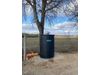
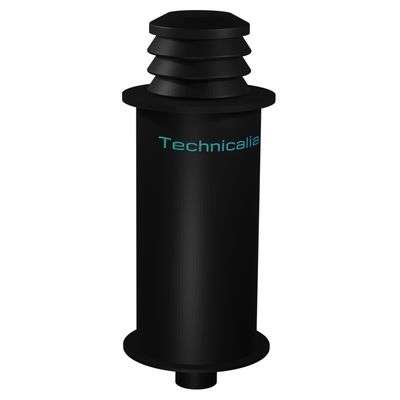
Technicalia - Carbon Filters
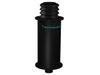
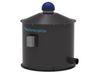
A carbon filter is a device used to remove pollutants from the air released by various types of equipment and installations: sewage pumping stations, expansion wells, wastewater treatment plants, biogas plants, solid waste sorting plants and landfills, animal farms, and all types of manufacturing plants. A carbon filter is equipped with a carefully selected activated carbon bed through which air flows, thereby purifying it. Airflow is forced by an exhaust fan. Depending on the intended use and the composition of the polluted air, we select the appropriate activated carbon, its mass, airflow, and other important device parameters.
Effective Technology
Thanks to the use of activated carbon to neutralize odors, the device is effective regardless of the current pollutant concentration (resistant to fluctuations), and is resistant to changes in humidity and temperature of the ventilated air, as well as ambient temperature. A carefully selected carbon bed ensures air purification of virtually all malodorous compounds. In most cases, it does not require air conditioning (changes in temperature, humidity, or composition).
Easy to Use
The device does not require any complex maintenance. If installed in a location that allows for automatic condensate drainage, the only maintenance required is periodic inspection of the electrical system and fan. Using airflow measurement, it is possible to send text messages to the user when the activated carbon bed is breached (fully utilized) – in order to initiate action to replace the bed.
Low Operating Costs
Considering its reliability, consistent purification efficiency, and minimal maintenance, the device boasts low operating costs compared to alternative technologies. Activated carbon, thanks to its versatility, is particularly effective in facilities with high concentrations of air pollutants, which negatively impact other air purification technologies. Furthermore, low operating costs are further enhanced by the low flow resistance generated by the filter bed, which translates into low fan energy consumption.
Facilities where carbon filters are most often used:
- sewage pumping stations, expansion wells
- sewage treatment plants
- biogas plants
- solid waste sorting plants and landfills
- paint shops
- yacht manufacturing plants
- animal breeding farms
- all kinds of production plants
Installation:
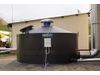
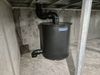
The carbon filter should be placed on a foundation, a layer of load-bearing subfloor. The device must be connected to a power supply in accordance with the technical data sheet. Contaminated air should be supplied to the carbon filter through a ventilation duct. The device body has a spigot with a spigot end.
- Material: PEHD / PP / stainless steel / carbon steel protected with paint / polyester-glass laminate
- Filter bed: activated carbon – appropriately selected in terms of physical and chemical parameters (impregnation)
- Flow: Fully scalable system, no limits
- Malodorous substances: H2S, NH3, VOC, CH4, Styrene, others
- AKPiA: Relay-based control, programmable logic controller-based control, HMI panels, gas concentration sensors, differential pressure sensors, temperature sensors, humidity sensors, air flow sensors, monitoring, GSM notifications