- Home
- Companies
- Verantis Environmental Solutions Group
- Products
- Verantis Tellerette - Tower Packing
Verantis Tellerette - Tower Packing
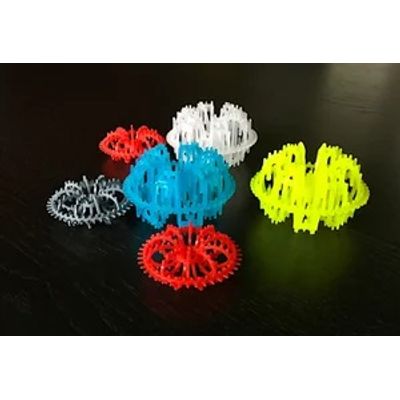
Tellerette® Tower Packing is designed to make it dramatically more efficient than conventional packing material for mass transfer, heat transfer, and particulate collection. Tellerette® technology puts the “power in your tower!” Tellerette Tower Packing helps control your environment and boasts a toroidal helix design that makes it dramatically more efficient than conventional packing material for mass transfer, heat transfer, and particulate collection. Verantis® scrubber systems are designed with Tellerette Tower Packing to increase residence time in the scrubber and improve removal efficiency. A shallow bed of Tellerette packing can also be used to provide effective mist elimination.
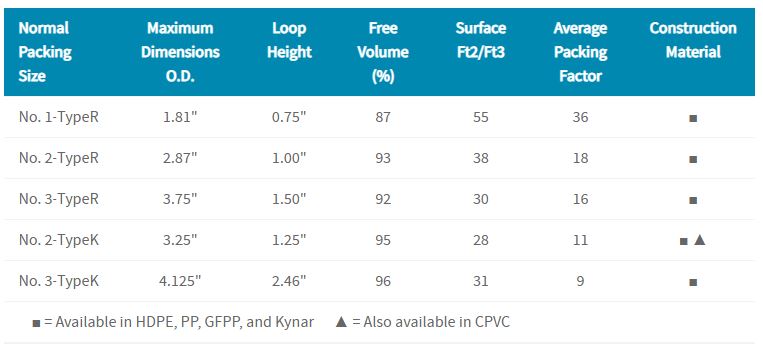
With our newest K-series Tellerette Tower Packing (2K & 3K), Verantis has improved the design with increased open area and reduced pressure drop, providing high scrubbing efficiency at velocities up to 700 fpm.
Tellerette Types:
Verantis Tellerette Tower Packing can be used with Verantis scrubbing systems as well as other manufacturers’ systems to provide exceptional pollutant removal efficiency while reducing your operating costs. Benefits include:
- Lower mass transfer unit height, permitting shorter packed beds
- Greater gas flow capacity, which permits use of smaller diameter, lower cost columns
- Lower pressure drop to reduce operating costs
- High open area design for minimal fouling
- High column stability - no classic flooding
- Effective impingement of both liquid droplets and solid particulate
- No channeling with proper liquid distribution
- Available in a wide range of materials, including:
- High-Density Polyethylene (HDPE)
- Polypropylene (PP)
- Glass-Filled Polypropylene
- Kynar® (PVDF)
- Xydar® (LCP)
- Select style available in Chlorinated Polyvinyl Chloride (CPVC)
- Additional engineered polymers available upon request
- Liquid is collected by inertial impaction
- Droplets form at countless interstitial holdup points
- As each droplet falls, it strikes the next packing element and bursts, exposing fresh surfaces to gas
- This agglomeration/dispersal cycle repeats continuously with no additional energy requirements
- Contaminants are absorbed with optimal efficiency