- Home
- Companies
- Disab Vacuum Technology
- Products
- Disab - Model ATEX - Vacuum System
Disab - Model ATEX -Vacuum System
DISAB manufactures ATEX vacuum systems for use in industrial settings that may contain, or have activities that produce, explosive or potentially explosive atmospheres. Examples include places where work activities create or release flammable gases or in workplaces handling fine organic dust such as grains, flour, wood, resins, plastics, coal, light metals, textiles and paper.
The first documented plant explosion caused by dust happened in Italy in 1785. Since then, there have been many more explosions, causing property damage, personal injuries, and fatalities. A better understanding of what causes these hazardous explosions has since been gained, plant operators also have a better knowledge of what needs to be done to minimize the risks of them occurring.
Dust as an explosion hazard
Today, industries around the world are faced with an increased challenge, due to the risks of explosion hazards. These hazards include fuel self-ignition, release of carbon monoxide due to smoldering, explosion propagation within closed systems, and secondary explosions caused by dust build-up. To eliminate the risk of explosion, it has become extremely important to invest in proper equipment that meets all the safety requirements for handling solid fuels. This has become an even greater priority for cement plants using petcoke. Petcoke creates more dust than other fuels and requires more resources to clean in order to create a safe workplace.
ATEX
When talking about explosion risks, how to prevent the explosion from occurring, and how to best protect a plant and its employees, it is important to mention the two Atmosphere Explosible (ATEX) directives adopted by EU. The two ATEX directives highlight the importance of protecting employees from explosion risk in areas with an explosive atmosphere. ATEX provides the minimum requirements of the equipment being used in order to improve the health and safety of workers at risk from explosive atmospheres.
in areas with an explosive atmosphere. ATEX provides the minimum requirements of the equipment being used in order to improve the health and safety of workers at risk from explosive atmospheres.
1999/92/EC
The ATEX “Worker Safety” Directive
This directive requires employers to protect workers from the risk of explosive atmospheres. The directive is based on three basic principles:
- Where possible, to prevent the formation of explosive atmospheres.
- Where explosive atmospheres are unavoidable, to prevent ignition.
- To ensure the health and safety of workers by mitigating the effects of any explosion that does occur.
The general obligation is ensuring that where explosive atmospheres could occur, workers can carry out their work in safety.
2014/34/EU
The ATEX “Equipment” Directive
The second directive covers equipment and protective systems intended for use in potentially explosive atmospheres. The directive defines the essential health and safety requirements and conformity assessment procedures, to be applied before products are placed on the EU market. In other words, all equipment must be assessed to ensure its design, construction, and installation minimize the explosion risk. The 2014/34/EU Directive is new as of April 20th, 2016 replacing the previous Directive 94/9/EC. DISAB complies with this directive.
Assessment of explosion risk
Explosive atmospheres can be caused by flammable gases, mists, vapors, or combustible dust. If there is enough of the substance mixed with air, then all it needs is a source of ignition to cause an explosion. It is the employer’s responsibility to assess the risk of explosion. Such an assessment should include the following factors:
- The likelihood of any explosive atmospheres.
- The likelihood of ignition sources being present.
- The scale of any anticipated effect (the consequence).
The danger of a secondary explosion and how to prevent it occurring
In general there is only one simple rule when handling combustible dust; keep it clean! While protecting the workers from hazardous risks, it is also important to keep the air free from dust that could potentially ignite the airborne particles. Also, by keeping the workplace clean it minimizes the risk of a secondary explosion. The secondary explosion is considered more dangerous, as it causes structural damage, building collapses, personal injuries, and sometimes fatalities. Most often the primary explosion occurs in a closed environment and “only” causes equipment damage. However, if there is spilled material and lots of dust in conjunction with the damaged equipment, the resulting blast wave from the first explosion could stir up heat and dust, making a secondary explosion unstoppable.
ATEX approved vacuum systems
Minimizing the probability of a secondary explosion is crucial. Using an ATEX-approved vacuum system, specifically manufactured for an industrial setting, minimizes the risk of a secondary explosion. By using a powerful vacuum system, the workplace will stay clean, as it removes dust and spillages. It also helps minimizing the risk of dust entering the moving parts in the plant or damaging bearings. Various industries around the world, such as cement factories, are starting to see the benefits of using a vacuum system to prevent explosion risks; not only to keep the air free from hazardous particles but also the be able to recycle spilled material back into the production process.
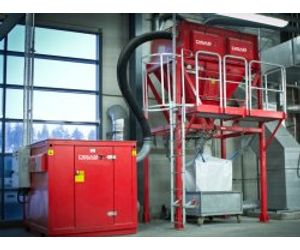
Coal dust could be a source of secondary explosions. This operator is using an ATEX complied DISAB stationary vacuum system to clean and remove potential hazardous coal dust.
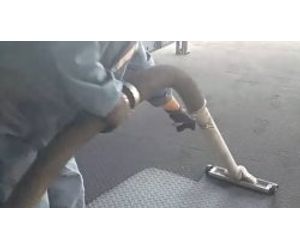
Minimizing the probability of a secondary explosion is crucial. Using an ATEX approved vacuum system, specifically manufactured for an industrial setting, minimizes the risk of a secondary explosion. By using a powerful vacuum system, the workplace will stay clean, as it removes dust and spillages. It also helps minimizing the risk of dust entering the moving parts in the plant or damaging bearings. Various industries around the world, such as cement factories, are starting to see the benefits of using a vacuum system to prevent explosion risks; not only to keep the air free from hazardous particles but also the be able to recycle spilled material back into the production process.
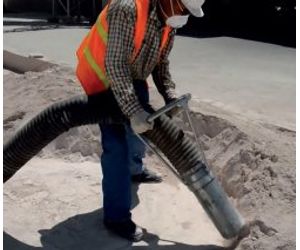
DISAB manufactures ATEX vacuum systems for use in industrial settings where explosive or potentially explosive atmospheres may occur. Choosing a DISAB ATEX approved industrial vacuum system provides peace of mind. We are specialists in the supply of ATEX industrial vacuum units and utilize the very latest technology to ensure that our machines not only conform to EU law but will remove dust in potentially hazardous environments without a risk to life. Our ATEX vacuum solutions include the following features:
- Various blast panels fitted to ensure intrinsic safety, including fire arrester
- An anti-static safety filter
- Differential pressure guard
- Rubber covered dust inlet
- Safety locking device on discharge valves
- Flame arrester or burst plates
- Non-return valve
Five tips to comply with ATEX and prevent explosion risks:
- It is mandatory that the workers have basic training in the principles of explosive atmospheres.
- Keep it clean! Dust has the potential to cause serious injury and even death through explosions and fires.
- Dust removal in EX-classified areas should be carried out using proper ATEX-compliant devices to ensure that the equipment does not act as as ignition source.
- Places where explosive atmospheres can occur must be classified in zones by the employer. The zones are categories based on the likelihood for an explosion occurring. It should be clearly visible which zones contain gas / liquid and which contain dust.
- At locations where an explosive atmosphere may occur, an Exwarning sign must be displayed.
DISAB offers a variety of ATEX compliant machines and system solutions. Ranging from our portable and smaller DISAB BagVAC to our large powerful vacloader DISAB Centurion P10. We have the right solution for your needs. Contact us for more details.