


- Home
- Companies
- Vala Sciences
- Products
- Vala Kinetic - Model KIC - Image ...
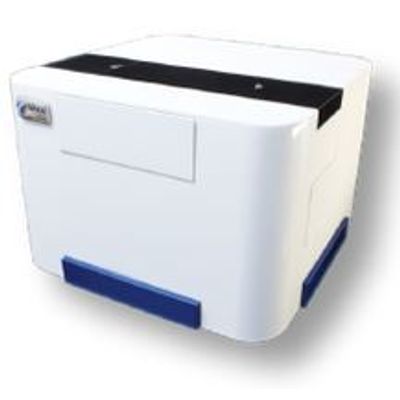
Vala Kinetic - Model KIC -Image Cytometer
KIC provides high throughput in situ “optical cytometry”. Vala’s flagship kinetic image cytometer (IC200-KIC®) with high-throughput automation and analytics is unmatched in visualizing and measuring subtle disease effects in individual cells.
KIC is a leap forward in cellular imaging, combining ultra-fast videography with high-throughput analytics that see and measure the effects of a dosed therapeutic candidate in real time on each of thousands of living cells simultaneously, to discern curative or detrimental effects with the highest sensitivity.
Video cytometry also incorporates the concept of “slow motion”, wherein recordings of events such as millisecond action potentials are played back more slowly to enable visualization.
Vala’s IC200-KIC utilizes sCMOS cameras to acquire high-speed videos (at a maximum of 1500 frames per second) of fluorescent indicators, which are then processed by the CyteSeer ® Analysis Software Platform to extract about 30 measurements of the morphologies of each transient of each cell. KIC is fully compatible with high throughput (HT) robotics and can be integrated into an existing HT workstation.
With automation, KIC can screen up to 7000 wells per day (in 96 or 384 well plates).
Single-cell, single-transient KIC was conceived for the same reason as HCS/image cytometry – to overcome the limitations of averaging by whole-field and whole-well (whole-plate) imaging, which ignores cellular heterogeneity.
For example, in whole-field and whole-well readouts, action potential propagation hiPSC-derived cardiomyocytes (hiPSC-CMs) blurs waveforms, and the requirement for synchronization largely prevents action potential characterization of neuronal action potentials because they are largely asynchronous in the brain (except perhaps during seizures).
- Sensitive sCMOS Camera: 5.5 MP, Sensitive + Low Noise
- Hybrid Auto Focus: Failproof
- Solid State Light Sources: Bright and stable
- Fast Synthetic Focus: Proprietary intelligent projection
- timulation: Electrical, Optical and Chemical
- Environmental Control: CO2, Temperature and Hypoxia
- KIC®: Movies for dynamic biological events
- Brightfield and fluorescent
Vala Sciences IC200-KIC® is a fully featured high-content screening system that is also capable of capturing high speed time-series images. The IC200 employs a combination of image-based autofocus and laser surface tracking to ensure every image is in optimum focus. With many objectives and well plates supported and its small footprint, the IC200 is our most versatile offering. The flexible modular design makes this system a great platform for customized solutions.
- Cameras : Up to two 5.53MP Scientific CMOS cameras
- Objectives :
- Plan APO 4x NA 0.20 (1.63 µm/Pixel)
- Plan APO 10x NA 0.45 (0.64 µm/Pixel)
- Plan APO 20X NA 0.75 (0.32 µm/Pixel)
- Plan APO 40X NA 0.95 (0.16 µm/Pixel)
- Plan APO 60X NA 0.95 (0.11 µm/Pixel)
- Autofocus :
- Surface Tracking plus Image Based
- Fault tolerant (error free) accurate autofocus on every field of view
- Performs autofocus in
- Objective Positioner : Proprietary, ultra fast, 100nm resolution positioner.
- Stage :
- Encoded XY Stage with 100nm resolution.
- Eject functionality serves sample out of the instrument to ease robotic integration.
- Well Plates Supported :
- Supports 1536, 384, 96, 48, 24, 12 and 6 well plates.
- Ability to define custom formats.
- Excitation Light Source : Solid State Light Engine with up to 7 UV-Vis-IR lines with lifetime >15,000 hours.
- Emission Filter Wheel : 10-Position high-speed filter wheel
- Standard Filter Sets :
- DAPI, FITC, TRITC, and Cy5 standard
- Other filter sets available.
- Dimensions : 21″ x 21″ x 22″ (53cm x 53cm x 56cm) WxDxH including light engine
- Acquisition Frequency :
- Time-series acquisition at 0.1-100 full frames per second.
- Time-lapse acquisition for repeated sequence of an imaging protocol.
- Stimulation Options :
- Electrical Stimulation: available with the automated electrode option.
- Optogenetics: Optical stimulation using any of the available excitation lines.
- Compound Addition: available with the liquid handling option.