


- Home
- Companies
- Alpha Measurement Solutions
- Products
- Van London - Model SZ 283 - ...
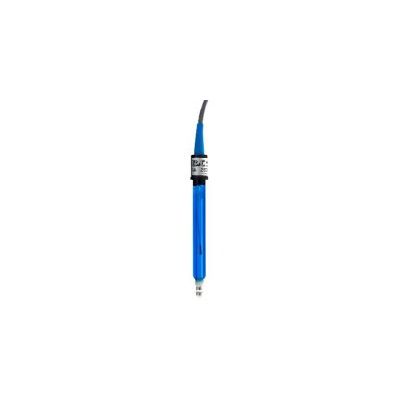
Van London - Model SZ 283 -Potentiostatic Electrode
This sensor is designed for the measurement of Free Chlorine, Chlorine dioxide and Dissolved Ozone in water. The potentiostatic method is an `amperometric` measurement with constant potential, made through 2 metal electrodes and a reference electrode dipped in a cell. The current running through the cell consumes Chlorine or Ozone contents, thus requiring constant renewal through a constant liquid flow.
In the traditional amperometric measurement it remains difficult to maintain a constant relation between cell current and Chlorine / Ozone concentration, especially near zero, because of the ORP and liquid resistance effects. As a result, frequent zero and sensitivity calibration are needed. In the potentiostatic measuring, the electrodes` potential is electronically controlled in relation to the liquid, providing a linear current/concentration relationship and a very stable zero value in oxidative absence. The sensor is shaped so that it is easy to clean and replace.
- Electrodes: 2 Platinum rings
- Reference: gel with annular junction
- Body: glass
- Cable: 3 m
- Max pressure: 10 bar at 20°C
- Dimensions: 110x12 mm