

- Home
- Companies
- AquaBlok, Ltd.
- Products
- AquaBlok AquaGate+ - Water Treatment ...
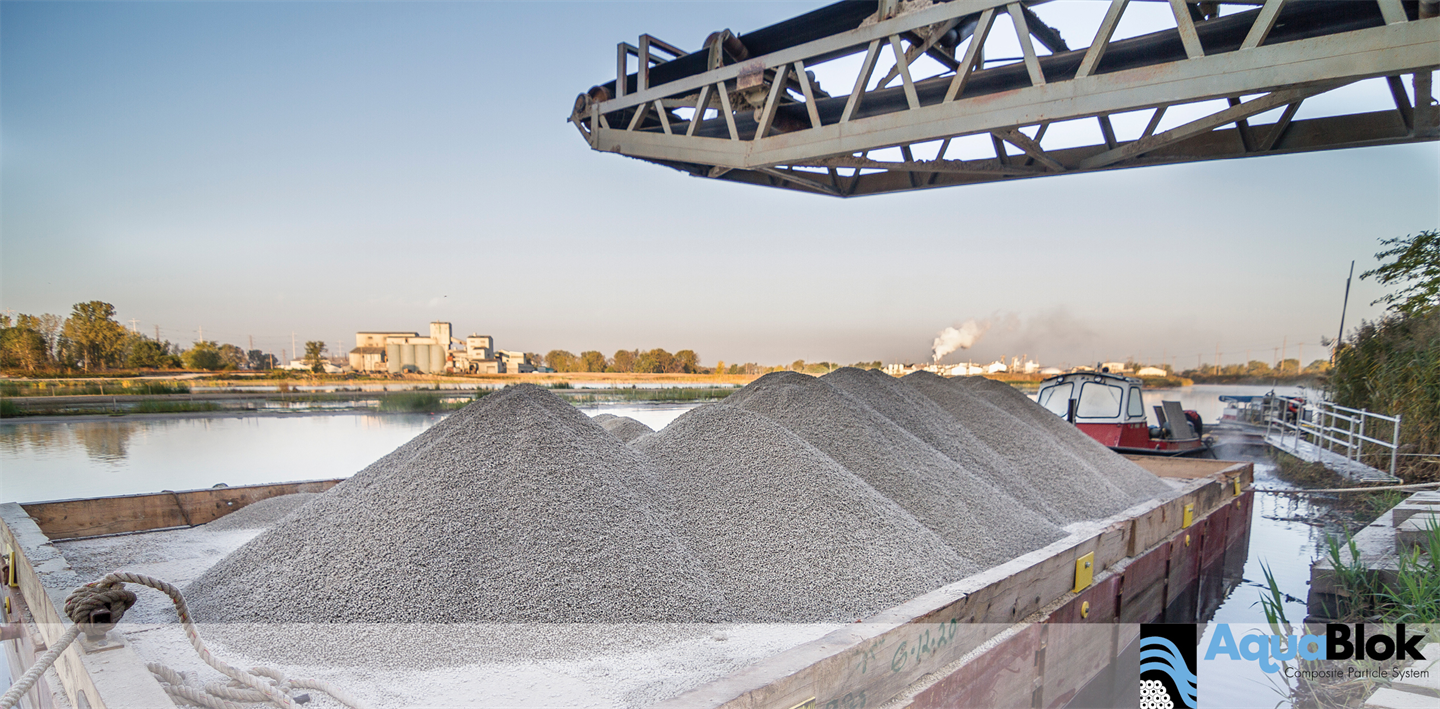
AquaBlok AquaGate+ - Water Treatment System
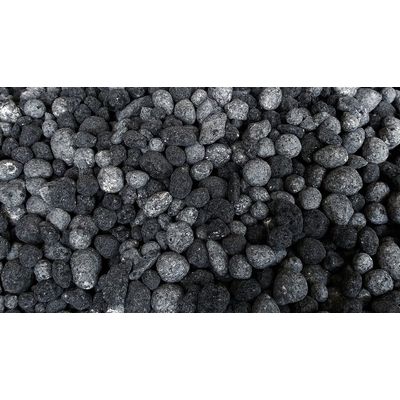
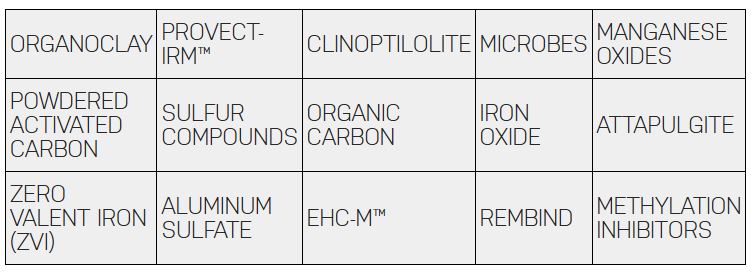
AquaGate+ is a specialized water treatment system designed for the cost-effective in-situ remediation and capping of contaminated sediments. It functions by delivering powdered amendments in a thin, porous coating around a solid core, thereby allowing water to move freely while restricting contaminant migration. Extensively researched and monitored, AquaGate+ enhances remediation efficiency and reduces the costs associated with amendment material delivery in aquatic environments. Its applications include in-situ treatment, reactive capping, permeable reactive barriers, and emergency response scenarios. The system uses activated carbon, known for its adsorption capabilities, to improve contaminant removal, with variations in activated carbon's particle size offering distinct performance benefits. AquaGate+ is engineered for uniform distribution and optimal contact between treatment materials and contaminants, ensuring higher effectiveness and reliability in sediment remediation efforts.
AquaGate+ delivers powdered amendments in a thin coating around an inner core, allowing movement of water through the matrix for treatment, while limiting the migration of contaminants. Sites where AquaBlok® and AquaGate+ materials have been applied have been monitored and studied extensively to confirm long-term performance. These materials improve remediation outcomes and are shown to reduce the cost of delivering amendment materials in aquatic settings.
AquaGate materials can be utilized in:
- In-Situ Treatment
- Active/Reactive Capping
- Permeable Reactive Barriers (PRB)
- Shoreline Sheen Mitigation
- Emergency Response
See Links to Below Sections:
- Introduction to the Use of Activated Carbon for Contaminated Sediment Remediation
- Influence of Activated Carbon Particle Size on Cap Performance: Implications for Modeling
- In-Situ Treatment: What is it, and what results have been demonstrated?
- Importance of Uniform delivery through water column; minimal material loss
- Installation support; in-house lab and technical support
Activated carbon continues to experience increased regulatory acceptance and implementation for a wide range of contaminated sediment sites throughout the U.S.
AquaGate+PAC was developed in 2010 under a DoD ESTCP project (ER-0825: In Situ Wetland Restoration Demonstration) and continued with an addition ESTCP project in 2012 (Puget Sound Naval Shipyard Pier 7 Bremerton, Washington) under ER-201131 Demonstration of In Situ Treatment with Reactive Amendments for Contaminated Sediments in Active DoD Harbors. This project was awarded the DoD’s Project of the Year in 2016.
The first full-scale application of activated carbon was in 2016 at Lake Onondaga which was designed as a mixture of Granular Activated Carbon (GAC) and sand at a very low percentage of GAC by weight. At that time, it was recognized that, in order for GAC to be placed through a water column, it must be saturated in advance and mixed hydraulically with sand. The contractor designed a large spreader system to enable the mixture to be pumped from the shoreline and placed as a slurry/mixture at the water surface.
Since this first full-scale application of a GAC/Sand mixture, other contractors have developed equipment to achieve a similar result, but many applications of GAC/Sand mixtures have also been applied with minimal or no saturation of the GAC and using placement equipment that is not specifically designed to support hydraulic delivery of the mixture from shore.
More importantly, since the Lake Onondaga application, which was performed in 2016, there has been a relative lack of any monitoring of GAC/Sand remedial designs in the industry. Since 2016, there have been over 25 sediment remediation projects using AquaGate in the U.S. and 5 additional projects in Norway. High profile sites employing activated carbon include: The Passaic River (RM10.9), Pearl Harbor (U.S. Navy) and the Scanlon Reservoir (St. Louis River, MN). More are currently in the planning stages.
“The growth and acceptance of activated carbon for sediment remediation has led to increased interest and research on the effects of particle size and the practical aspects of placement. See the next section for more information on this topic.”
AquaGate was developed to help overcome many of the challenges of placing both powdered and granular versions of adsorptive and reactive treatment materials. The following sections highlight some of the key considerations and provide important technical information that should be considered when evaluating the various approaches to adding amendments to sediments.
I. How did we get here? — Performance of Different Particle Sizes of AC
The application of AC for vessel-based removal of aqueous contaminants dates back to work done by the EPA to address drinking water (Dobbs and Cohen, 1980). In these applications, granular activated carbon (GAC) was used due to ease of replacement and control of residence time for adsorption. As a result of this success, early investigation for the use of AC for sediment remediation focused on GAC even though testing and applications of powder activated carbon (PAC) was being performed and generally resulted in lower contaminant concentrations than an equal amount of GAC (due to the higher surface area-to-volume ratio of PAC) (cite Upal work). This was initially driven by the difficulty of handling and placing PAC in the water, resulting in a preference for GAC. During early applications of GAC, there was recognition of the potential for improved performance of PAC, but, there was a perception that the long-term design duration of sediment remedies (i.e., 50-100 years) would ultimately allow time for GAC to provide equal performance at field scale. Unfortunately, this thinking did not consider the potential for short-term failure due to rapid upwelling. In addition, the relative lack of post placement monitoring data for GAC applications make it difficult to evaluate or confirm either long-term performance or short-term failure. At this time, there is still not good data available to compare the full-scale performance of GAC vs. PAC.
In an attempt to provide insight into the long-term performance of AC, AquaBlok has participated in a number of comparative studies of PAC vs GAC. Recently, a long duration adsorption study of PCBs by PAC and GAC was performed and the data from the adsorption test was then utilized to develop a representative CapSim model that demonstrates the implications of particle size on the testing protocols, modeling, and design of AC sediment remedies. These results are presented herein.
II. Why does this matter? — Testing Approach and Results
The long-term performance of AC is a critical component for the success of AC-based sediment remedies. For this reason, the test duration for adsorption was set to 50 weeks. The duration was determined to be long enough to demonstrate the usefulness of an AC-based sediment approach in a cap since longer durations would equate to essentially a diffusion-based system. This study’s period of 50 weeks is the first known attempt to quantitatively evaluate and compare long term adsorption of PAC and GAC. Two (2) sources of AC were tested in PAC and GAC forms, resulting in four (4) AC samples. The adsorption experiment for 11 PCB congeners (PCB-10, 25, 70, 101, 118, 138, 149, 170, 180, 194) covering low to high MW hydrophobic compounds and in the presence of TOC (10 mg/L NOM) was conducted by Danny Reible at Texas Tech. PCB concentrations were set to be similar to those at real sites.
provided key data that can be used to evaluate performance of PAC and GAC under various circumstances. The key findings are summarized below:
-
At the end of 50 weeks, PAC removed 210x more contaminant than GAC and was 1300x faster in adsorption, on average. The adsorption of AC is heavily influenced by particle size, even for the same base AC material – PAC removes more contaminant and removes it faster.
-
When groundwater velocity is high, GAC performance is greatly reduced, and breakthrough of contaminants is far more likely. The kinetic differences (i.e., speed of adsorption) between PAC and GAC will result in different real-world capacity in environments where contaminant transport is highly groundwater driven. Because GAC is slower to adsorb, it requires a longer residence time to equal PAC adsorption.
The below figure illustrates the impact of the particle size on the amount of contaminant that can be adsorbed by PAC and GAC in a specific time frame.
For example, at a fixed cap thickness of 15 cm, a groundwater velocity of 0.1 cm/d will provide a residence time of 150 days for this cap. At this residence time, PAC has a KD of 1010 L/kg while GAC has a KD of 107.5 L/kg. When the groundwater velocity increases by 10, the residence time will reduce to 15 days, reducing the GAC capacity to 106.5 L/kg while the PAC retains its Kd at 1010 L/kg. As groundwater velocity continues to go up, the residence time of the cap and the GAC capacity will go down in turn. Because the key is residence time, the same effect will be experienced for a fixed groundwater velocity if the cap thickness is reduced. A thinner cap will result in reduced residence time, which will also reduce the amount of contaminant GAC can remove in this time frame.
To evaluate potential implications, the results of the GAC adsorption tests were integrated into a CapSim model. The model was set up to be representative of actual caps that have been specified for full-scale projects. The cap model evaluated consisted of a 15cm thick chemical isolation layer consisting of GAC and sand overlain with a 10 cm habitat layer (sand). Contaminant concentration was 0.5 µg/L of PCB10. Groundwater velocity was set at 1 cm/d, representing a cap residence time of 15 days. Breakthrough was defined as 1% of the starting contaminant concentration (0.005 µg/L) at the surface of the chemical isolation layer (i.e. below the habitat layer).
Two potential placement outcomes were modeled. The first assumed a theoretically perfect/uniform distribution of the GAC amendment within the chemical isolation layer. This was performed to illustrate what the CAPSIM model typically assumes. A second approach was developed that was intended to evaluate the potential impacts of nonuniformity in GAC distribution within the GAC/Sand layer during placement. It was assumed that the GAC/sand isolation layer would be placed in three lifts, with GAC separating and layering on each lift. Results of these modeling scenarios are summarized below and model output is shown in the graphics.
-
The unmodified base case scenario (theoretically uniform placement while ignoring the speed of adsorption) suggested that a cap constructed with 1% GAC would be protective for 100 years.
-
When GAC kinetics and nonuniformity are added (i.e. constructing the cap in three lifts) to the model, the 1% GAC is no longer protective and will experience breakthrough in just over 3 years.
-
Using the same nonuniformity scenario but doubling the GAC amount to 2% extends the cap life to 14.4 years – but still well below the unmodified base case. Further, it is necessary to increase the GAC content to 5% in order to return the cap life to 100 years.
-
In comparison, a thin layer of AquaGate+PAC (delivering a lower dose of AC than the 1% GAC scenario) is protective for 100 years.
- 10 cm contaminated sediment layer with PCB10 at 0.5g/L porewater concentration, 15cm capping layer, 10cm habitat layer, and 1cm/d upwelling rate.
- Breakthrough (1% of starting concentration) evaluated at bottom of habitat layer (i.e., 10cm depth).
The CapSim modeling exercise demonstrated that particle size and placement implications are critical when upwelling velocity may limit residence time within the cap or when realistic field installation challenges may impact the uniformity of the amendment within the capping layer. Some of the key conclusions of the modeling exercise are as follows:
-
The significant performance difference of PAC vs GAC suggests that each of these AC materials should be viewed as separate approaches during the testing, modeling, design, and specification of the AC-based sediment remedy. Also, it is critical that testing data on PAC materials is not utilized for specifications that call for a GAC/Sand approach.
-
There is an increased ‘risk-of-remedy’ for GAC-Sand caps due to the nonuniform distribution that can happen during placement of GAC-Sand mixtures. The density difference between GAC and Sand will result in separation during placement through the water column. As a result, the residence time of the contaminant through GAC is effectively reduced, creating a significant potential impact on the expected performance of the remedy.
-
A PAC-based approach using AquaGate+PAC will result in a reduction in material quantity and/or layer thickness. This opens the application of AC-based remedies to difficult-to-access areas (like under piers) or in challenging and sensitive environments.
-
PAC-based approaches provide protectiveness at a significant reduction to material quantity, overall cost, and remedy risk.
IV – Where do we go from here? - Recommendations
The use of AC is an important part of improving remedy outcomes and remedy design for contaminated sediment sites. To improve outcomes, the treatability testing approach and modeling methodology must be carefully examined and planned to insure potentially significant issues impacting the expected performance of the remedy do not occur.
The data collected in a 50-wk adsorption test provide definitive and conclusive insight on the effective adsorption equilibrium of PAC and GAC. The faster kinetics and higher effective capacity of PAC over GAC can result in much lower material quantity and overall remedy cost for PAC based remedies. As a result of these significant differences, the following are important recommendations to consider in remedy design utilizing AC:
-
Treatability testing of AC should use the commercially available particle size of the material anticipated for application. Testing results generated for one particle size should not be attributed to another particle size.
-
It is important to understand the site-specific characteristics such as pore water velocity and ensure that data exists that can assist with appropriate inputs into modeling.
-
Modeling AC should be based upon commercially available materials as it has been demonstrated that particle size has a significant impact on real-world performance of AC-based sediment remedy.
-
Placement/installation methods should be carefully considered in combination with the type of AC utilized in the design since models assume theoretically perfect distribution of the AC to achieve the modeled results.