


Webber Manufacturing Company, Inc.
- Home
- Companies
- Webber Manufacturing Company, Inc.
- Products
- Webber - Agree Chambe
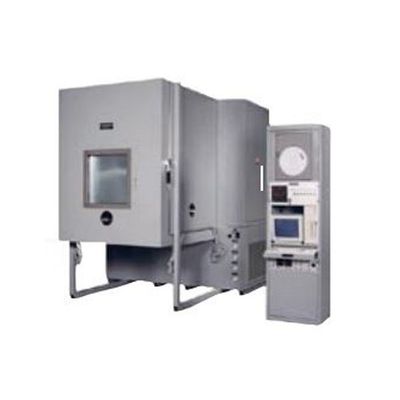
Webber - Agree Chambe
Designed to fit over a vibration table. Standard temperature range: -100*F to +350*F. Temperature change rates: 5*C/Min. Standard sizes: 27 to 64 cubic feet.
Most popular related searches
environmental test chamber
vibrating table
digital temperature controller
test chamber
environmental testing
pressure gauge
check valve
stainless steel check valve
environmental chamber
gasket sealing
- Interiors: are fabricated of heavy gauge brushed finish Type 304 stainless steel.
- Heliarc welded interior seams to form a rugged, vapor-tight unit.
- Insulated with non-settling, non-hygroscopic high “R” value fiberglass.
- Exteriors: are fabricated of structural steel and corrosion resistant steel sheet metal
- Removable floor with diaphragm, to allow test product to be attached to vibration table
- Standard 2” diameter customer port.
- Dual silicone rubber gaskets to seal door to the chamber.
- Heavy-duty door hinges and a specially designed, adjustable door latch.
- Tough, industrial quality, textured enamel paint finish.
- Access panels for easy serviceability.
- Stainless steel drain with check valve.
- Pressure equalization system.
- Standard chamber finish is medium gray.
- All chambers allow handling with a forklift.
- Heavy duty, industrial quality, semi-hermetic compressors.
- Thermal expansion valves to control cooling, allowing maximum pulldown rates and high load ratings, without sacrificing one for the other.
- Liquid injection valves to insure sufficient compressor cooling during all chamber temperature conditions.
- Bypass systems for accurate temperature control while eliminating life-shortening rapid compressor cycling.
- Bypass time-out feature shuts compressor off, after timing out in a standby condition, reducing energy consumption and eliminating standby operation when profiles do not require cooling.
- Refrigeration pressure gauges on all systems.
- System design backed by years of environmental experience and constructed of high quality commercially available components.
- Electrical resistance heaters are low mass open nichrome elements supported by ceramic insulators, for fast response and minimal residual heating effects.
- Heaters baffled from test space to prevent direct radiation on test specimens.
- Controlled by heavy duty, quiet mercury contactors rated for millions of cycles.
- Standard thermal links or electronic high temperature limiters with redundant heater contactor.