


- Home
- Companies
- NCH (UK) Ltd.
- Services
- Cooling Treatment Services
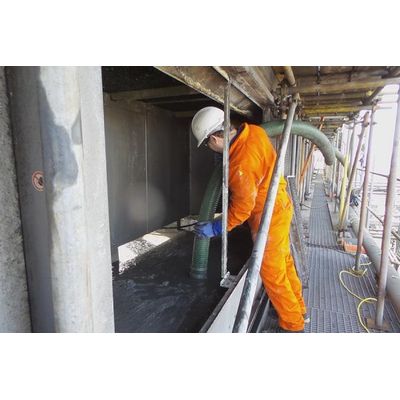
Cooling Treatment Services
Effective water treatment is essential for your cooling water system. Maximise the efficiency, reliability and safety of your cooling water system with water treatment from Chem-Aqua.
Cooling towers are recirculating water systems used to remove heat from industrial processes and/or air conditioning equipment. They extract waste heat from a system and eject it into the atmosphere, primarily through evaporation.
Cooling tower systems require specialised maintenance to ensure safe and reliable operation, including an effective water treatment programme.
Dead legs are sections of water system piping with low or no flow due to system design and/or operation. Common examples include capped piping, closed cross connections, low point drains, cooling tower equalisation lines, bypass lines and out of service rooms or equipment. Intermittently operated faucets, showers, chillers, heat exchangers and pumps can also become dead legs depending on how long they are out of service.
Stagnant water in dead legs provides ideal conditions for biofilms to form. Any sediment accumulations also foster biofilm growth. Once established, biofilms, and associated microorganisms, provide a protective environment for any Legionella entering a building with the source water to multiply to high levels. Eventually, Legionella may be released into the bulk water and cause disease.
Dead legs in water systems can cause serious and costly problems. Design, operational and maintenance strategies must be employed to help manage biofilm problems where dead legs cannot be eliminated.
Best practices recommend cooling towers be cleaned and disinfected at least twice a year. This may increase if inspections show visible microbiological growth, an excessive build-up of debris, or in response to positive Legionella or bacteria test results. New cooling tower systems or systems that have been out of service for an extended period (generally defined as > 5 days), should be cleaned and disinfected before start-up to reduce Legionella risks.
Effective cooling tower cleaning and disinfection is a labour-intensive procedure that requires specialised processes, equipment and expertise. Specialised cleaning and disinfection procedures are necessary to remove fill deposits and biofilms. Specific protocols may be necessary to accommodate systems that cannot be shut down for cleaning, or require Legionella remediation.
Using the services of a qualified company ensures this work is performed safely and follows industry recognised procedures with supporting documentation.
When scale and corrosion inhibitors are added to a water supply, maintaining correct treatment levels can be a challenge. Fluorescent-traced product feed and control systems can help address concerns. In this method, a colourless fluorescent dye called PTSA is added to the cooling water inhibitor, serving as a treatment level tracer. PTSA levels can be accurately measured in about 30 seconds using a handheld or in-line fluorometer, requiring no harmful chemical reagents.
Knowing when and where PTSA products should be applied ensures the success of an inhibitor treatment. That’s why Chem-Aqua performed extensive research into the limiting factors that must be considered when using PTSA. The information gathered was used to design our aquaDART® online monitoring, control and chemical feed system for cooling towers.
Chem-Aqua’s aquaDART® provides precision control. This state of the art automation system helps facilities control inhibitor levels and provides real-time alerts when levels are out of range, improving cooling tower performance whilst reducing costs.