


- Home
- Companies
- GROUND Engineering Consultants
- Services
- Falling Weight Deflection Service
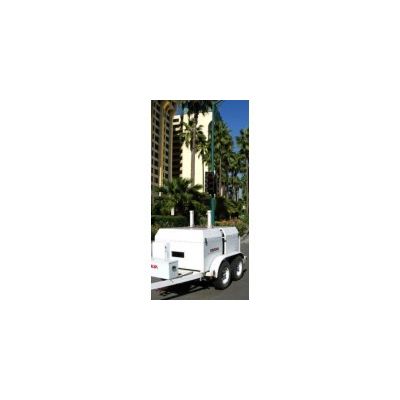
Falling Weight Deflection Service
The use of falling weight deflection equipment is a non-destructive method for determining the in place modulus of pavement (asphalt and concrete) layers, including the base, subbase, and/or subgrade moduli values. This information is valuable in qualifying the condition of a pavement system for acceptance, rehabilitation (overlay, repair, replacement), or to evaluate the potential reduction in life because of special use, such as a temporary haul road where the contractor is responsible for restoration.
GROUND has performed deflection testing for thousands of miles of roadway alignments/parking fields for private, municipal, state and federal agencies. Using our proficient and experienced engineering staff and state-of-the-art non-destructive falling weight testing machine, we can meet the demands and schedule of your deflection project.
GROUND performs deflection testing using a Foundation Mechanics, Inc. JILS Falling Weight Deflectometer with a loading capability ranging from less then 4,000 pounds to over 30,000 pounds, using a standard SHRP 7-sensor geophone configuration. Testing is usually conducted at intervals ranging from less then every 100 linear feet to every 500 linear feet or more. Normally, 25 to 50 tests can be obtained in one hour of testing.
- Falling Weight Deflectometer (FWD) uses dynamic impulse loads and geophones spaced at specific radial distances from the load point to develop deflection basin. Using the measured deflection basins, the resilient modulus of the in-situ non-stabilized subgrade materials and effective pavement layers are estimated
- GROUND has a JILS Heavy Falling Weight Deflectometer, which has the capability of adjustable loads ranging from approximately 2,500 pounds to over 40,000 pounds. The loads are transmitted to the pavement through a set of springs and 12-inch diameter rigid plate. Seven geophones are used to measure the deflection basin at offsets of 0, 8, 12, 28, 24, 36 and 48 inches
- The deflections are used in the component analysis to determine the resilient modulus of the subgrade materials along with the effective structural number of the existing pavement section
- Evaluate roadways for potential roadway improvements
- Evaluate the remaining life following a 2-inch rotomilling and subsequent overlay based on the current structural design requirements to achieve a 20 year design life
- Provide data to the owner for evaluating the condition of the existing pavement be it a roadway or runway
- Evaluate the feasibility of landing larger aircraft
- Evaluate the condition of the existing road, as well as the potential impact of subjecting the road to additional truck traffic resulting from the excavation