


Flood Barrier Installation Services
The installation of the Tubebarrier is simple, fast and can be installed almost anywhere. The Tubebarrier flood defences is delivered per 10 meter element complete in a pallet box, which contains everything you need for the installation of the weir. Every situation is different and therefore the set up of the weir varies. But globally, you place the pallet boxes every 10 meters and draw the elements out of the boxes, just so that the sides of the Tubebarriers meet. The elements are connected to each other. Also there is a flap that one draws over the connection. This in order to neatly close it all. By doing this you have connected the two elements. Repeat this process with the other elements.
You are able to do this with 2 people. You can easily do the flood defences barrier installation with a four people. Overall you can install a 100 meters of weir per hour when all elements are in place. We also have a frequently asked questions page where you can find lots of information regarding installation of the Tubebarriers.
Step 1) positioning storage boxes:
The storage boxes can store one section of 10 meter complete with all the needed mounting parts to fix the Tubearrier to the surface. Position these boxes at the deployment location at a distance, of 1 meter less than the length of te stored section. Remove all loose parts from the box and place them next to the box on the ground (On the side where the front flap points, the water). Tilt the storage box so that the bottom of the barrier points down and front flap points towards the water.
Step 2) deploying the Tubebarrier(s):
Inspect the surface where the flood defences will be deployed and make sure there are no sharp objects on this surface as these can damage the PVC fabric.
Now pull the Barrier apart like an accordion, just as far as it is tight. If the end of the first Section is not mounted against a wall (i.e. is free standing), it must be above the expected water level so that the water cannot run around the end. In case of strong winds, it is possible to secure the front flap with the supplied pin pegs. There are rings in the front flap where you can press the pegs into the ground. You can also lock the barrier in the rear.
With the second section (and any following sections) you have to make sure that when you pull the section apart, the side of this section is tight against the previous section.
Step 3) Connect the Tubebarrier units together:
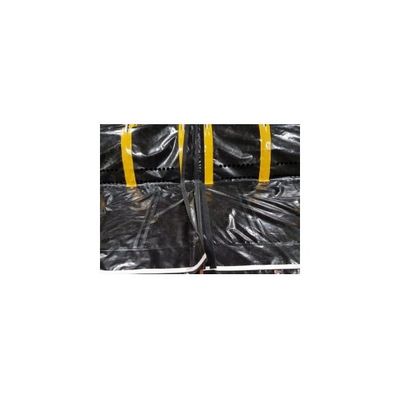
When the ends of the two sections are tight against each other, you connect both sections with a zipper and a flap with Velcro. The zipper can only be zipped from one side, from the front flap towards the tunnel. Before you attach the finishing flap with Velcro over the zipper, it is important to first tighten the current section to ensure that the flap is tight. Now pull the protective flap over the zipper and press it firmly onto the Velcro. The zipper is now protected against dirt and damage.
Step 4) Attaching the ground anchor plates: We have different kind of ground anchors, for every situation one, sometimes more.
Step 5) Mount the ground anchors of the first section correctly to the surface when the second section is equipped with ground anchors (and so on). For more information, please send an email to info@tubebarrier.com.
Step 6) Storm flap and final check:
At the rear of the Barrier is a small storm flap. This flap is equipped with rings where you can insert the supplied pin pegs to secure the flap. You can also weight the back flap with material that is present (e.g, sandbags, tiles or stones etc.)
- When a section is fully assembled, it is best to do a final check.
- Every barrier is properly connected to each other.
- The front flap is nice and tight and not wrinkled.
- The entire front has ground anchors and is it securely attached.
- Pay attention to any damage to the material.
- Remove all loose material and tools etc. around the barrier.
- Ensure adequate supervision.