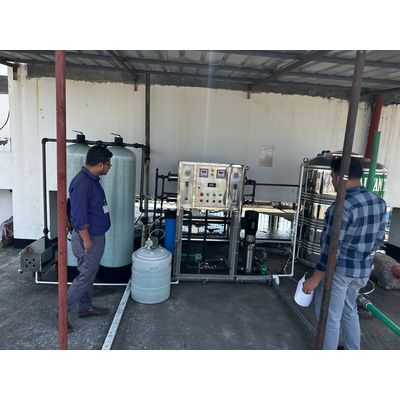
A reverse osmosis (RO) plant is a water treatment system that uses a process called reverse osmosis to purify water. Reverse osmosis is a technology that involves the application of pressure to force water molecules through a semipermeable membrane, removing impurities, contaminants, and dissolved solids in the process.
Components:
A. Intake: This is the point where raw water is collected, typically from a natural source such as a river, lake, or underground well.
B. Pre-treatment: Before entering the reverse osmosis process, the water undergoes pre-treatment to remove large particles, sediments, and other impurities. This step usually involves processes such as sedimentation, filtration, and chemical dosing.
C. High-pressure pump: The pre-treated water is then pressurized using a high-pressure pump. The purpose of this pump is to overcome the natural osmotic pressure and push water through the semipermeable membrane.
D. Reverse osmosis membranes: These are the heart of the RO plant.