

- Home
- Companies
- TK Consult AG
- Services
- Groundwater Flow
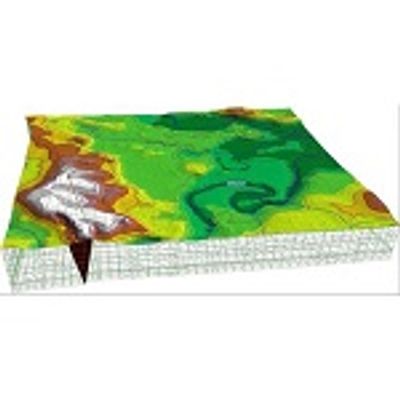
Groundwater Flow
Our services include, but are not limited to:
Inverse Modelling / Model calibration:
Hydraulic parameters governing model equations (e.g., hydraulic conductivity) are unknown or, in best case, uncertain. Unknown parameters can be estimated by means of inverse modelling (automatic calibration) upon available measurements.
Optimum management of water resources:
Numerical models can be used to optimize the management of groundwater (e.g., design of optimum pumping networks) or to forecast the effects of planned constructions (e.g., infiltrations to a tunnel).
Well catchment areas and protection zones:
The delineation of catchment areas and protection zones are prerequisite to the concessions of new wells. Numerical modelling of Particle Random Walk and back-transport are well suited to that end.
Drainage design:
Some structures like underground parkings or mines require dry conditions during the excavation and stabilization phases. Numerical modelling is an optimum tool to simulate different drainage scenarios (e.g., a pumping field or a geological drain) and optimize the drainage system.
Optimum design of monitoring networks:
The sustainagle use of groundwater resources must always be ensured. A monitoring network must be available to control the quality and quantity of the available resources. Such network is optimally designed by means of numerical modelling in such a way that amount and quality of the rendered data is maximized.